
Construction demand evolves as activities and equipment move through the project. Identify the loads required now, the next planned stage and the likely duration of each arrangement. This supports a practical temporary-power plan and avoids treating an early site estimate as the requirement for the entire programme.
Treat distribution as part of the scope
The generator must connect to a site whose routes, work areas and access conditions can change. Describe the distribution points, cable routes and responsibilities for moving or altering equipment. Protection, earthing and site suitability require review for the actual arrangement each time it is materially changed.
Site establishment
- Civil work
- Structure
- MEP
- Commissioning
- HANDOVER
Typical loads
- cranes
- hoists
- dewatering pumps
- tools
- welding
- site offices
- lighting
- compressors
- commissioning loads
Site change
Cable routes that were safe this month may cross a work front next month.
Related photographs and videos
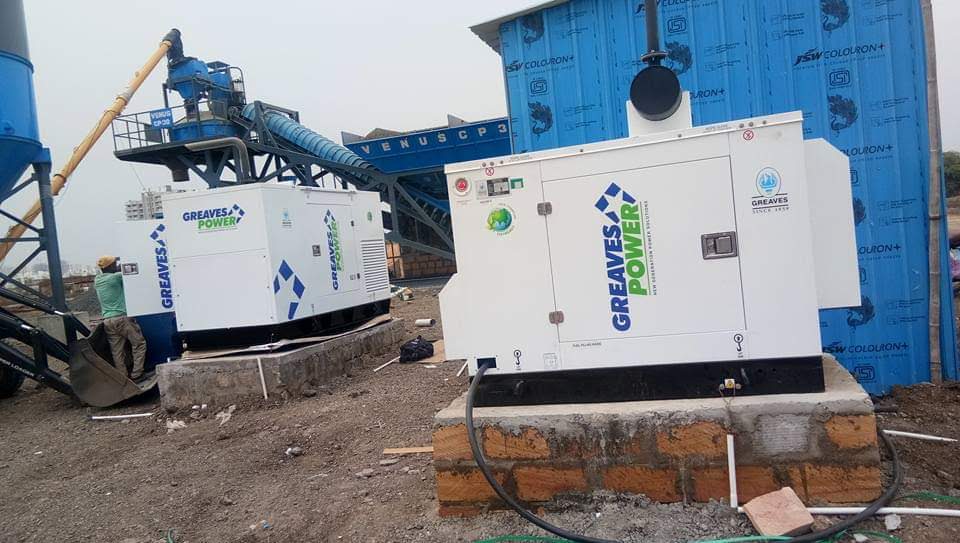
Keep change and handover controlled
Agree who can request additional loads and who authorises changes to the temporary installation. Record the accepted configuration and any operating limitations. A clear handover helps the site team understand the supported demand and the conditions that require a fresh engineering assessment.
Engineer My Industry Power Requirement
Engineer My Industry Power Requirement. Share the application, location and information available so the next discussion can address your actual requirement.
Related guidance
Engineering intent
Construction & Infrastructure Power should be evaluated as part of the complete power system rather than as an isolated catalogue item. Operating duty, connected load, interfaces, protection, controls, installation conditions, testing requirements and lifecycle consequences determine whether the arrangement is appropriate.
Engineering considerations
Construction and infrastructure projects often begin before permanent electrical infrastructure is fully available. For construction sites, generator power is not only temporary electricity. It is project execution infrastructure. A finished building usually has defined electrical distribution. That is why construction generator planning must be flexible, staged and site-aware. A construction and infrastructure generator strategy may include:
| Early site establishment | Small/medium rental generator, DBs, lighting |
|---|---|
| Batching plant | Motor, mixer, compressor and pump load planning |
| Tunnelling / metro | Ventilation, pumps, lighting, controls and emergency backup |
| Fabrication yard | Welding, cutting, compressors and heavy tools |
| Night work | Site lighting and fuel/runtime planning |
| Commissioning | Temporary power, load testing and controlled energisation |
| Grid delay | Prime/rental power until permanent supply is available |
Selection and design considerations
Do not treat tunnel power as ordinary open-site power. A generator suitable for early site cabins may not suit heavy works or commissioning loads later. Fabrication loads may be intermittent but high impact. These loads may be smaller, but they support site administration, safety and communication. For temporary offices, a compact generator or shared temporary distribution may be suitable, subject to load and site review. Night construction needs lighting that is safe, stable and positioned correctly. Lighting power may look simple, but poor temporary cabling can create safety risks. A single generator plan at project start may become outdated as the site evolves. The temporary distribution system is what delivers usable power to site work.
Integration and protection considerations
The site load today is not always the site load next month. For small sites, offices, lighting, tools or limited construction loads. For separate zones, cranes, batching plants or remote work areas. For high capacity, redundancy, staged operation or variable load. For fluctuating loads, noise-sensitive periods or fuel optimisation where justified. For critical pumps, tunnels, safety systems or emergency backup. The correct architecture depends on load, project phase, site layout, access and criticality. It is temporary power engineering, not simple rental. A start-and-run check is not enough for critical construction loads. The rental-power source says future rental contracts may increasingly require transparent reporting of fuel consumed, energy generated, runtime, average loading, carbon emissions, renewable contribution, battery utilisation and fuel savings, making energy performance measurable rather than assumed.
Testing, commissioning and verification
The objective is not temporary electricity in the narrow sense. It is temporary utility infrastructure capable of supporting critical operations with predictable performance. 🏭 Planned industrial shutdowns 🏗 Construction and infrastructure projects 🖥 Data-centre expansion 🏥 Hospital backup ⛏ Mining and quarrying 🛢 Oil, gas and petrochemical operations 🚇 Airports, metros and rail systems 💧 Dewatering and water infrastructure 📡 Telecom networks 🚨 Emergency and disaster recovery ⚡ Grid maintenance and peak support The true value lies in the ability to mobilise power quickly without sacrificing engineering discipline.
Operating and lifecycle considerations
The bridging-power requirement should form part of the replacement plan. Construction loads can change as the project evolves. The rental configuration may need to change with project phase. The temporary generator should be evaluated against the actual commissioning duty. At that point the rental generator is functioning as a temporary industrial power asset. A facility with UPS-supported loads requires additional care. A kVA number alone does not establish generator/UPS compatibility. Specific equipment format should be confirmed against the job and current availability.
Decision and application considerations
If any link is weak, the generator may run but the project may still stop. Construction loads should be classified by phase and priority. A proper site-power plan avoids treating every temporary load as equally critical. A tower crane is not only a kW load. If voltage dips excessively, crane controls may trip, contactors may drop out or safety systems may interrupt operation. Do not choose generator capacity only from one motor nameplate. A pump failure during excavation, monsoon or tunnelling work can quickly become a project risk. Tunnelling and metro projects may require temporary power for: load priority • ventilation • dewatering • cable routing • earthing • fuel logistics • safety access • redundancy • maintenance windows
Direct answer
Construction demand evolves as activities and equipment move through the project. Identify the loads required now, the next planned stage and the likely duration of each arrangement.
The practical decision for Construction & Infrastructure Power should be based on verified load, equipment, interface and site information. Where equipment-specific data, regulatory applicability or a project study is required, this guidance does not replace that verification.