

In short. An open generator set has no factory canopy, so the engineering responsibility for cooling air, combustion air, exhaust, noise, vibration, weather protection, safety and service access moves from the manufacturer to the installation. It is not an incomplete silent set; it is the right choice where an engineered generator room exists or is being built, because it offers better access and easier integration. Chosen for a site without such a room, it becomes an unreliable and noisy machine.
What is left out, and who provides it
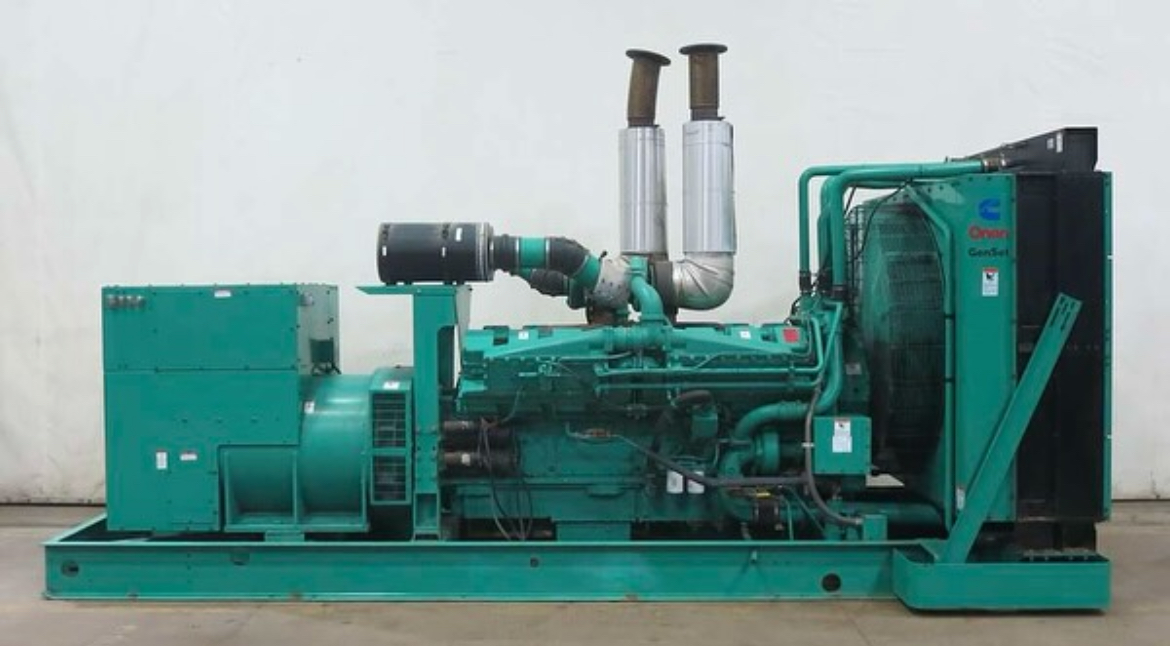
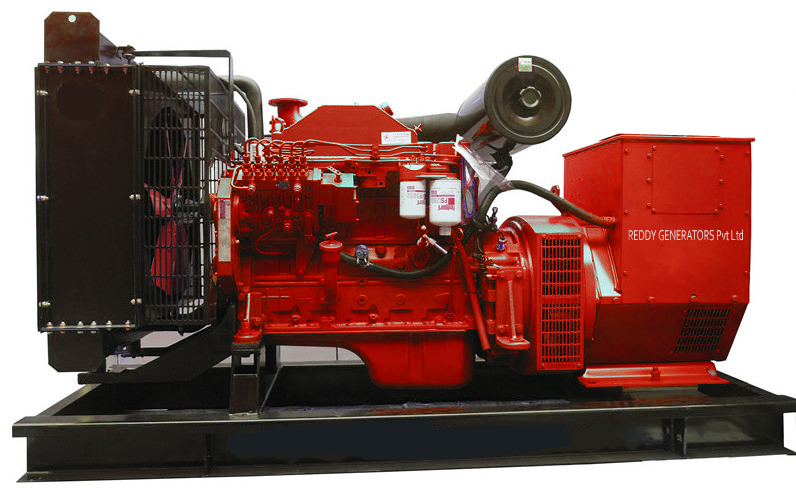
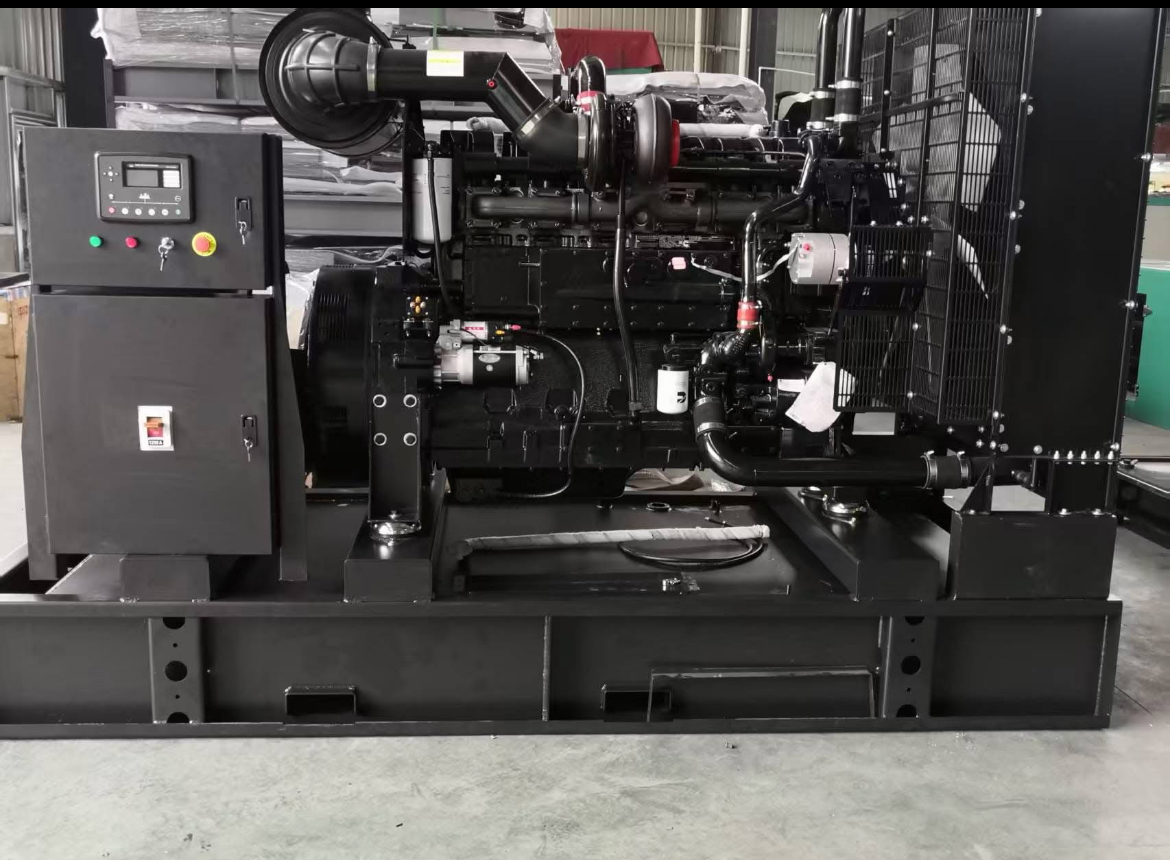
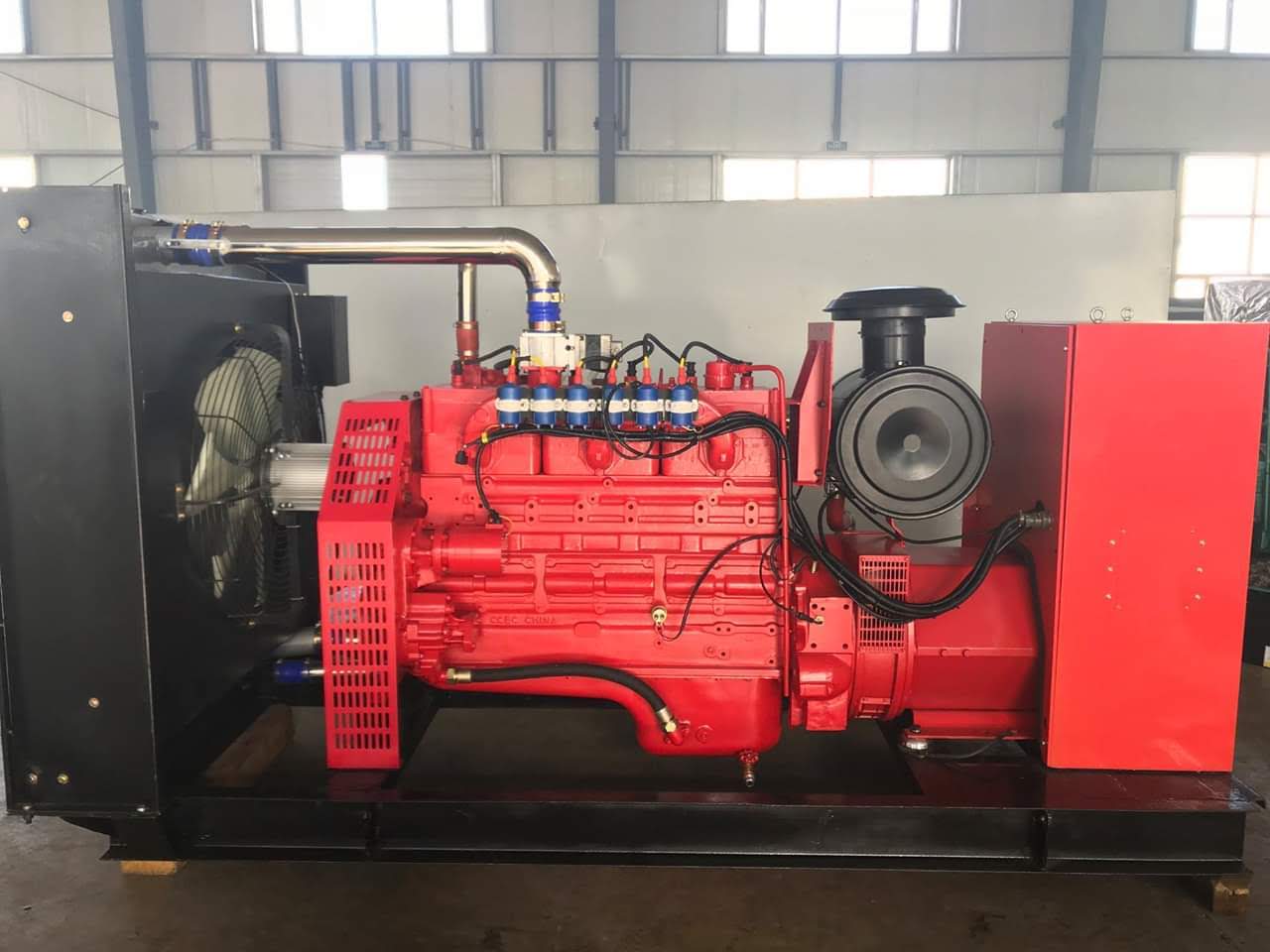
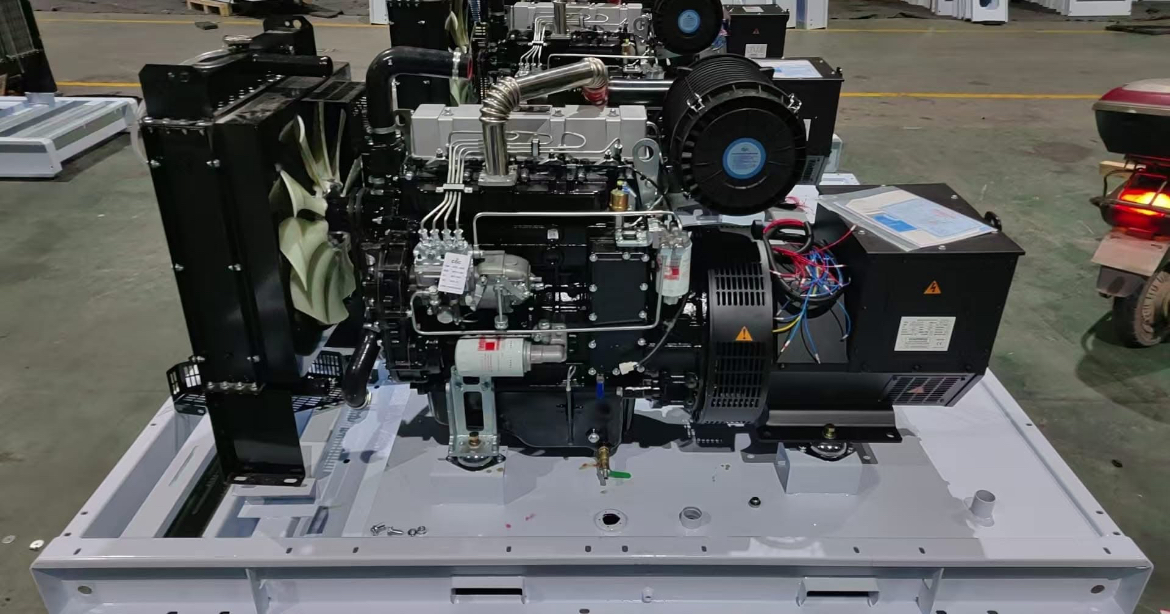
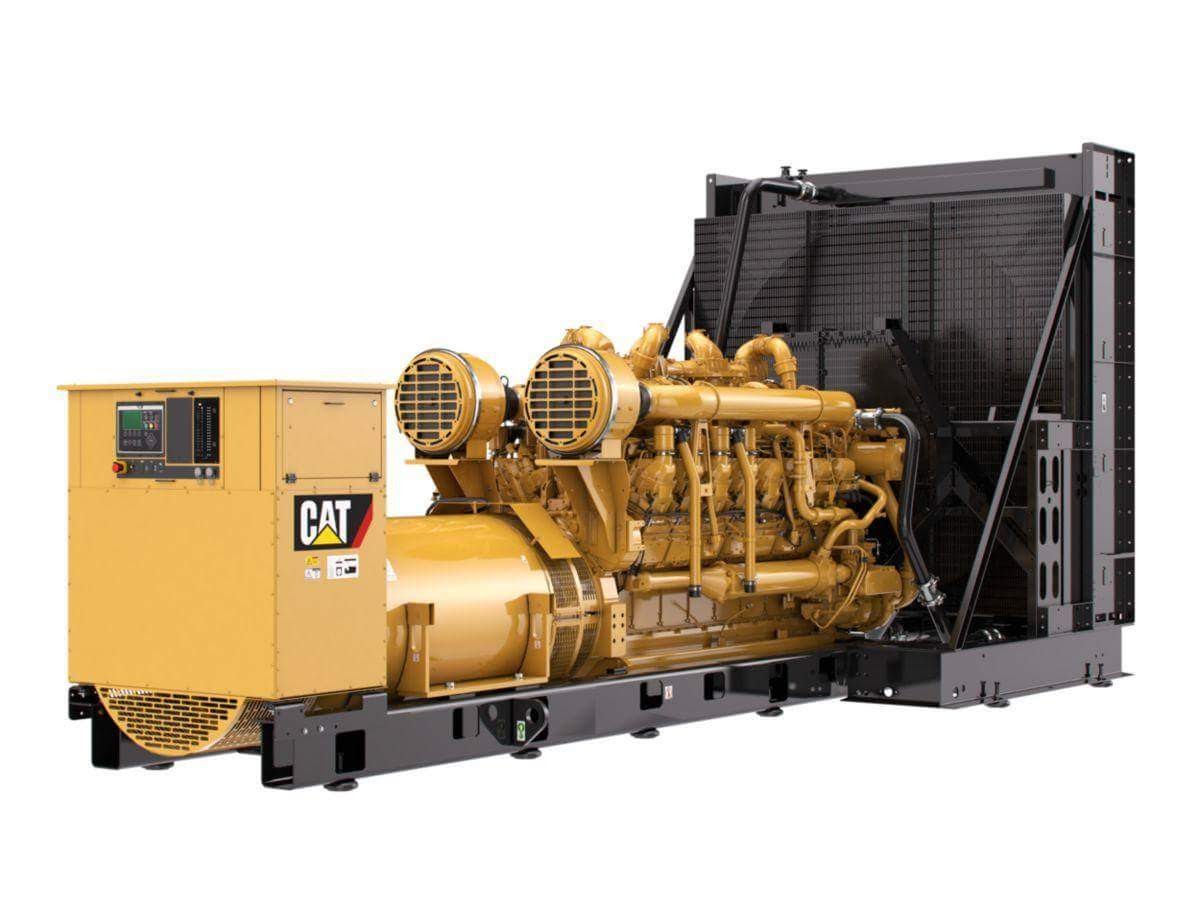
An acoustic enclosed set packages the radiator ducting, attenuated air inlets and outlets, exhaust silencer, weather protection and a degree of security into a canopy that the manufacturer has tested as a whole. An open set delivers the engine, alternator, radiator, controller and base frame, and nothing else. Everything the canopy would have provided must now come from the room: louvres sized for the airflow, a duct from the radiator to the outlet, an exhaust system with a silencer and insulated pipe, acoustic treatment that brings the room to the noise limit, a foundation that controls vibration, lighting, fire detection and a layout that lets the set be serviced. The electrical principle is identical to an enclosed set; only the physical architecture changes, as the generator systems overview explains. The acoustic enclosed set page describes the alternative for comparison.
| Function | Enclosed set | Open set |
|---|---|---|
| Cooling air path | Built into canopy with tested louvres | Room inlet louvre, radiator duct, outlet louvre, all engineered |
| Noise control | Canopy rated at 75 dB(A) at one metre | Room construction, attenuators on air paths, exhaust silencer |
| Exhaust | Silencer within canopy, short tailpipe | Full exhaust system designed for backpressure and termination |
| Weather and security | Canopy | Building envelope and access control |
| Service access | Through canopy doors, limited | All-round access if the room allows it |
| Capital cost | Higher per set | Lower per set, higher civil and installation cost |
When an open configuration fits
Open sets suit facilities that already treat the generator as plant rather than as an appliance: industrial plants with a dedicated power house, hospitals and data centres with purpose-designed generator rooms, large commercial buildings with a basement plant area, and multi-set installations where several machines, switchboards, transformers and a fuel system share one engineered space. They also suit sites with very large ratings, where a canopy becomes impractical and a room or a containerised module is used anyway. In each of these cases the room engineering is being done regardless, so the canopy would duplicate it. Open sets are a poor fit for rooftops, open yards, residential neighbourhoods and any site where the civil work is not under the generator engineer’s control. In India, where CPCB noise rules require sets up to 1,000 kVA to meet 75 dB(A) at one metre and manufacturers supply them enclosed to achieve it, an open set is normally a deliberate choice for a room that achieves equivalent attenuation.
The room must breathe, cool and reject heat
A generator room is a heat-rejection system with a generator inside it. The radiator fan draws air across the engine and pushes it through the core and out of the building, and the engine takes its combustion air from the same room. The inlet louvre must admit the sum of radiator and combustion air with the low pressure drop a pusher fan can overcome, the outlet must be ducted from the radiator face with a flexible connection so hot air cannot recirculate, and the two openings must be arranged so that outside wind does not oppose the flow. Heat radiated from the engine block, exhaust manifold and alternator into the room must be carried away within the allowable temperature rise, or the intake air warms and the engine derates. The room ventilation guide gives the airflow calculation and the heat rejection guide the figures to put into it. A room that is too small, has undersized louvres or faces the monsoon wind is the most common reason an open set performs worse than an enclosed one of the same rating.
Exhaust, noise and vibration
The exhaust system for an open set is a design task: a flexible bellows at the manifold, a residential or critical grade silencer chosen for the attenuation the site needs, insulated pipe in the smallest number of bends, a condensate drain, and a termination that keeps fumes away from openings, with the total backpressure at full load inside the engine’s published limit. The exhaust backpressure guide covers the check. Noise control for an open set is room-level engineering: dense walls, acoustic doors, attenuators on inlet and outlet air paths that do not strangle the airflow, and absorptive lining to reduce reverberation. A wall or attenuator that reduces noise but restricts cooling swaps one problem for another, so the acoustic and ventilation designs must be done together. Vibration is controlled by the set’s anti-vibration mounts on a level, rigid plinth, with flexible connections on exhaust, fuel, cable and duct so that nothing rigid bridges the isolation.
Access, safety and multi-set rooms
The advantage of an open set is access to the engine, filters, belts, batteries, alternator and fuel system from all sides, which makes routine service faster. The advantage exists only if the room provides the clearances: at least a metre on the service sides, more at the radiator and alternator ends, headroom for lifting heads and a route to remove the set for overhaul. Safety provisions include emergency stop at the door, fire detection, a fuel shut-off outside the room, lighting on the emergency supply and restricted access. Where several open sets share a power house and run in parallel, the room becomes a small power plant with a common bus, load sharing, sequencing and protection, and the paralleling page covers that layer. When an open set is relocated, every one of these interfaces changes; a set that performed well in one room can fail in another because the ventilation, exhaust or earthing were different, so a move is a new installation, not a transport job.
Related photographs and videos
More related media (4)
Common mistakes
- Choosing an open set to save on the canopy without budgeting the room engineering. The civil and acoustic work costs more than the canopy and the set is noisy until it is done.
- Sizing the louvres by the wall space available rather than the airflow required. The engine runs hot, derates and shuts down on the first summer afternoon.
- Letting the radiator discharge into the room without a duct. Hot air recirculates, intake temperature climbs and output falls.
- Adding acoustic walls after complaints without rechecking airflow. Noise improves and the set overheats.
- Moving an open set to another room and assuming it will perform as before. The new room’s ventilation and exhaust were never designed for it.
What to send us
Send the load list or required rating, the drawings or a measured sketch of the proposed room with wall positions, louvre options, door sizes and the exhaust route to outside, and photographs of the space. Tell us the neighbouring occupancies for noise, whether more than one set will share the room, and whether an existing set is being replaced or relocated. Send your open generator requirement.
Questions engineers ask
Is an open generator cheaper than an acoustic enclosed one?
The set itself costs less, but the room must then provide ventilation, exhaust, noise control and weather protection, which usually costs more than the canopy. Open sets are economical where an engineered generator room exists or is being built for other reasons, such as a multi-set power house.
Can an open generator be installed outdoors under a shed?
Not as a rule. A shed gives no noise control, exposes the alternator and controller to dust and monsoon moisture, and rarely manages radiator air properly. An acoustic enclosed set is the right configuration for outdoor installation; an open set belongs in a designed room.
How much ventilation does a generator room need?
Enough to carry the radiator airflow plus combustion air plus the air needed to remove radiated heat within a 10 to 15 degree rise. For sets in the 250 to 500 kVA range this is commonly 8 to 15 cubic metres per second, with louvre free areas sized for low pressure drop; the engine data sheet gives the exact figures.
How is noise controlled for an open set in India?
By room construction: dense walls, acoustic doors, attenuators on the air inlet and outlet, a high-attenuation exhaust silencer and absorptive lining, designed to meet the CPCB limit of 75 dB(A) at one metre and the ambient noise limits at the boundary. The ventilation design must be checked again after the acoustic treatment is added.
Generators by rating
- Under 15 kVA generators
- 15–50 kVA generators
- 50–125 kVA generators
- 125–250 kVA generators
- 250–500 kVA generators
- 500–1000 kVA generators
- 1–2 MVA generators
- 2 MVA and above generators
Technical content reviewed by Srinivas Reddy, Managing Partner, Reddy Generators. Last updated 19 October 2026.