

In short. Generator engine service covers the diagnosis, repair and verification of the diesel prime mover: starting, fuel delivery, combustion, lubrication, cooling and the air and exhaust path. It begins with exact engine identification, because the same kVA rating is built on different engines, and it reads symptoms such as smoke, oil consumption or loss of power together rather than one at a time. The work is closed by a test that reproduces the original complaint, normally on load.
Identify the engine before the fault
“A 125 kVA Kirloskar” is a generator description, not an engine specification. The same rating has been supplied over the years with different engine models, different injection systems and different emission builds, and each has its own torque settings, valve clearances, oil specification, filter numbers and service procedures. The engine nameplate, usually on the block or rocker cover, carries the model, serial number and often the build or arrangement number, and that is what defines the correct procedure and the correct parts. A CPCB IV+ engine with electronic injection is serviced very differently from a mechanically governed engine of the same output built ten years earlier.
Alongside the nameplate we want the running hours, the duty the set performs, the service history and any change made recently to fuel supply, load or installation. Engine construction and the differences between generations are explained under generator engine architecture.
Read symptoms together, not alone
Engines rarely present one clean symptom. They present a cluster, and the cluster is more informative than any single item. Black smoke alone could be overload, a blocked air filter, a tired turbocharger or an injector fault. Black smoke with low boost and normal fuel pressure points to the air side. Black smoke with high exhaust temperature and the set carrying rated load in a 42 degree room points at ambient derating. The table shows how the common complaints combine.
| Complaint | Usually involves | Check before condemning the engine |
|---|---|---|
| Cranks but slow to start | Cranking speed, battery, fuel supply, compression, glow or intake heater where fitted | Battery voltage under crank, fuel at the filter, air in the system |
| Black smoke | Air restriction, turbocharger, injectors, overload, high ambient | Air filter indicator, boost pressure, actual load against derated rating |
| Blue smoke | Oil passing rings, valve guides or turbocharger seals | Crankcase blow-by, turbocharger shaft play, oil consumption record |
| White smoke | Unburnt fuel from low compression or timing, coolant entering a cylinder, very cold start | Coolant level trend, compression or cylinder leak-down, injection timing |
| Rising oil consumption | Rings and liners, guides, turbocharger, external leaks | Blow-by measurement, leak inspection, oil analysis |
| Low power or frequency sag on load | Fuel filters, injection equipment, turbocharger, governor, overload | Fuel pressure under load, boost, governor response, measured kW |
| Low oil pressure | Oil level and grade, pump, bearings, relief valve, sender | Mechanical gauge reading at temperature, oil dilution by fuel |
Two of these deserve emphasis. Low oil pressure is the one condition where continuing to run can turn a minor repair into a scrap crankshaft, so a confirmed low reading stops the set until the cause is known, and serious mechanical knock is treated the same way. Everything else is best investigated with the engine running on load, where the evidence is.
The crank-no-start case
A generator that cranks and does not fire is the commonest engine call on standby sets, and the engine is often innocent. Cranking speed is the first measurement: a diesel needs enough speed to build compression heat, and a tired battery or a corroded cable can crank the engine visibly yet too slowly to fire. If speed is adequate, fuel comes next, meaning fuel at the filter, no air in the lines, the stop solenoid or electronic fuel enable actually operating, and no water or sludge drawn from a neglected tank. Only when cranking and fuel delivery are proven does compression become the suspect. The battery and starter side of this is covered under battery and starting system service, and the injection side under fuel injector and pump service.
Agreeing the scope and handling what disassembly reveals
Once the likely cause is established, the proposed scope should name the systems involved, the manufacturer procedures to be followed, the parts expected and the inspections to be done after disassembly. Engines have a habit of showing more once opened: a cylinder head removed for a valve job may reveal liner scoring, and a turbocharger removed for seals may reveal oil feed sludge. Those findings should be photographed, measured against the manufacturer’s limits and put back to the customer as a documented change of scope, not absorbed silently or ignored. Where the findings point to upper-engine wear the discussion moves to a top overhaul; where they reach the crankshaft and bearings it becomes a major overhaul decision.
Parts fitted must match the engine build, which is why the serial number matters more than the generator rating; see generator engine parts.
Verification on load
An engine that starts after repair has demonstrated one thing, and the complaint was usually something else: smoke on load, frequency sag when the compressor starts, overheating after an hour, oil pressure falling at temperature. The post-work test should therefore reproduce the original condition as closely as the site allows, with oil pressure, coolant temperature, exhaust colour, boost where measurable, voltage, frequency and current recorded against time. On a synchronous alternator, engine speed and electrical frequency are locked together, so a frequency that holds steady under a load step is direct evidence that the engine is making its power. The service record then states what was found, what was restored, what was measured and what remains uncertain, so that the next engineer does not start from zero.
Related photographs and videos
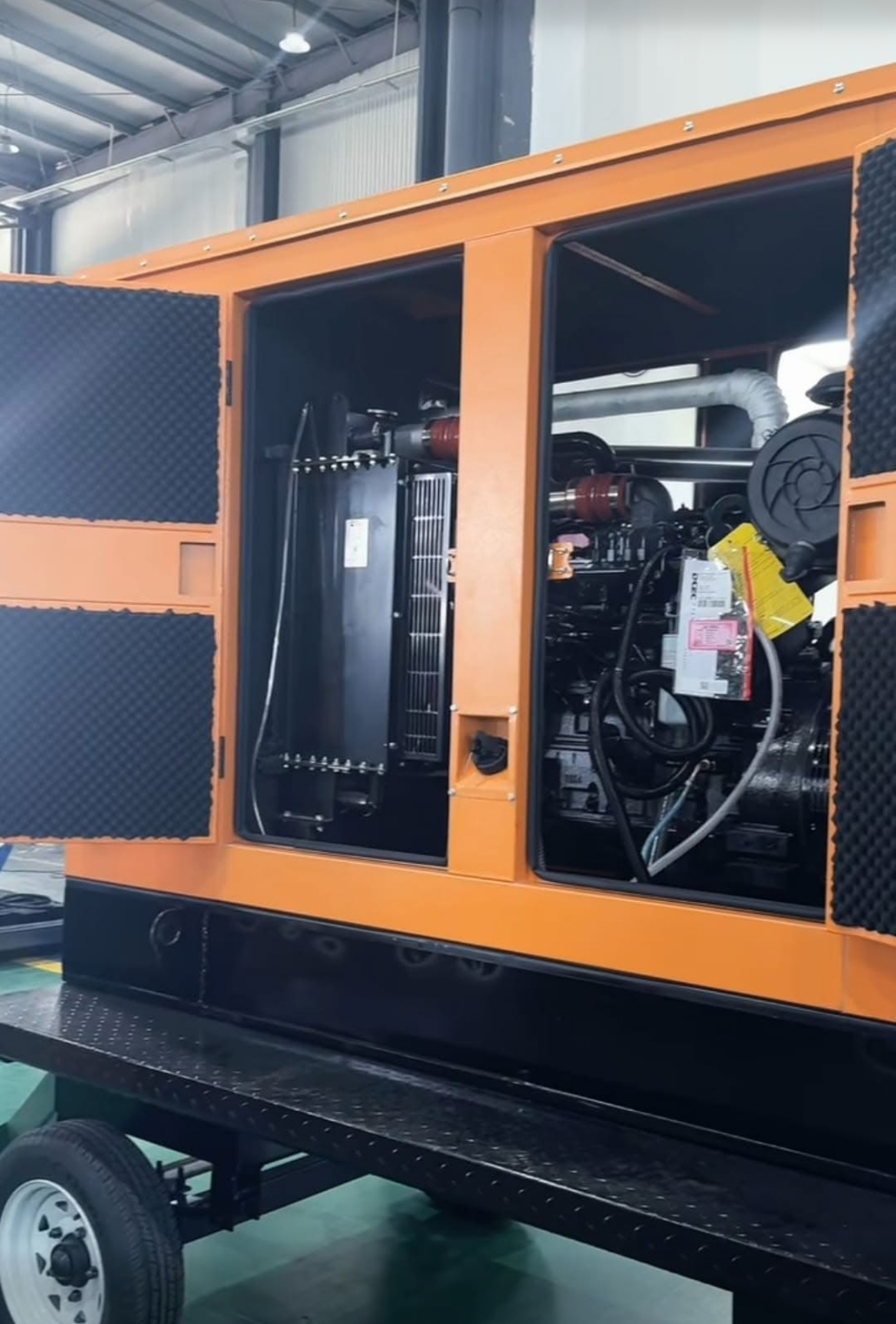
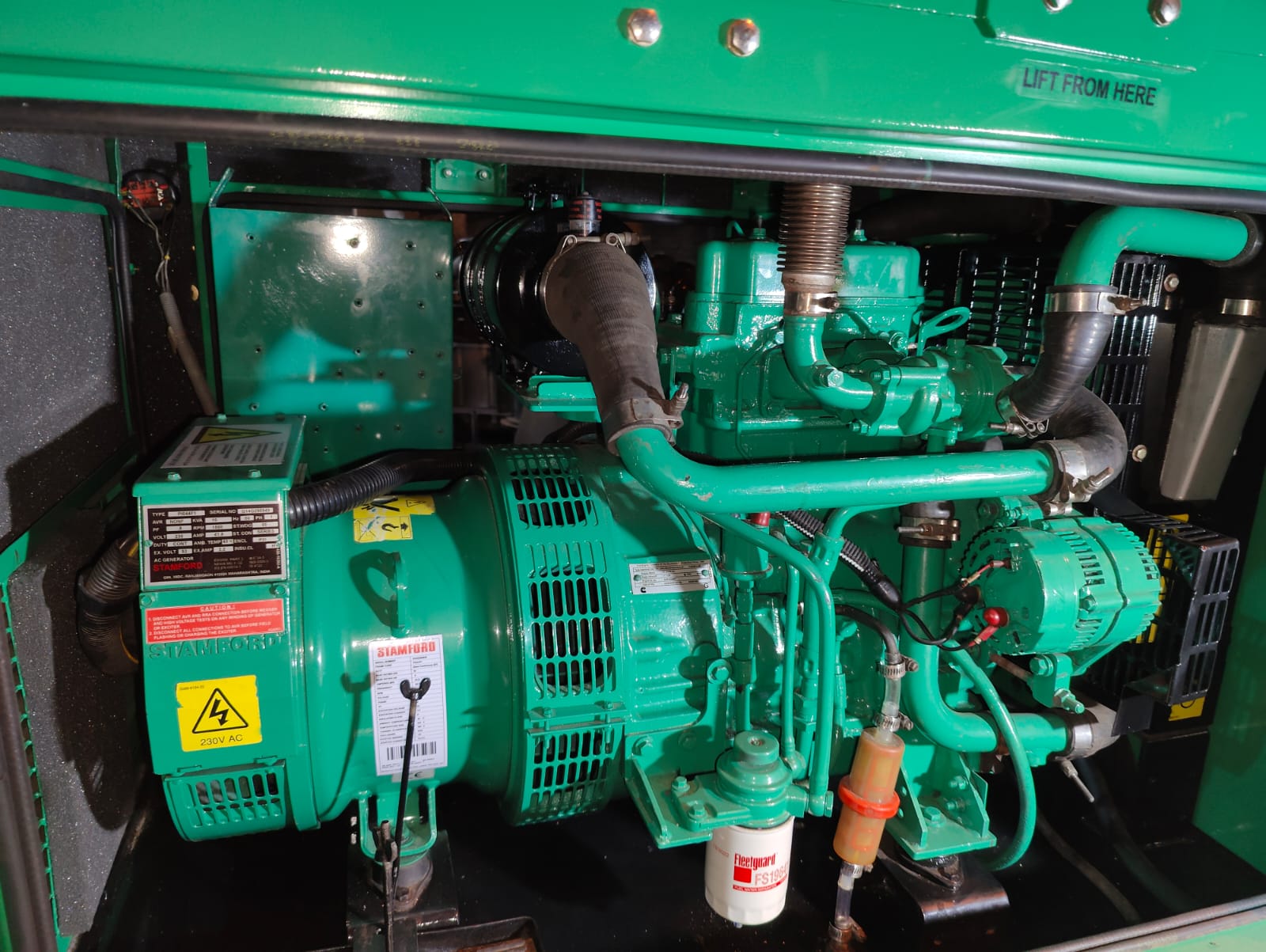
Common mistakes
- Ordering parts against the generator kVA instead of the engine serial number, which brings the wrong gaskets, filters or injectors to site and stalls the repair.
- Diagnosing engine condition from smoke colour alone, which condemns engines whose real problem is a blocked air filter or an overloaded set.
- Resetting a low oil pressure shutdown and running the engine to “see if it does it again”, which converts a sender fault or a worn pump into a bearing failure.
- Replacing a starter motor on a crank-no-start complaint before measuring cranking speed and battery voltage under load, which leaves the weak battery in place.
- Closing the job on a no-load start when the complaint was behaviour under load, which guarantees the same call at the next outage.
What to send us
Send a photograph of the engine nameplate and the generator nameplate, the hour-meter reading, a description of the symptom and when it appears (cold start, under load, after a period of running), the smoke colour if any, the oil and coolant top-up history and any service or repair reports from the last two years. A short video of the engine running with the complaint visible is often more useful than a page of description. Use the service and AMC enquiry form.
Questions engineers ask
What does black, blue and white exhaust smoke mean on a generator engine?
Black smoke is unburnt fuel from too little air or too much fuel: air restriction, turbocharger loss, injector faults or overload. Blue smoke is burning oil from rings, guides or turbocharger seals. White smoke is unburnt fuel vapour or coolant: low compression, retarded timing, a cold engine or a head gasket problem. Each colour is a lead, not a diagnosis.
Can a high-hour engine still be reliable?
Yes, if it has been maintained to schedule and its measurements are within limits. Running hours indicate exposure, not condition. A 20,000 hour prime-power engine with clean oil analysis, normal blow-by and steady oil pressure can be in better order than a 2,000 hour standby engine that has sat with old fuel and dirty oil for years.
Why does the frequency drop when load is applied?
Because the engine is not producing enough power to hold rated speed, and frequency follows speed directly. Causes include restricted fuel filters, injection wear, a turbocharger not delivering boost, a slow governor, or simply more load than the set can carry at site ambient. Measuring kW, fuel pressure and boost during the load step separates these.
How is oil consumption judged as abnormal?
Against the manufacturer’s stated allowance for that engine and against the machine’s own history. A gradual rise in top-up between services, recorded in the log, is the earliest warning of ring, liner or turbocharger wear. A sudden rise usually means an external leak or a turbocharger seal failure and should be investigated at once.
Does engine service include the alternator and panel?
No. Engine service addresses the prime mover and its directly attached systems. Output voltage problems, excitation, insulation and panel or controller faults are separate disciplines, although a complete generator inspection covers all of them and a loss of output is often traced across the boundary between engine and alternator.
Technical content reviewed by Srinivas Reddy, Managing Partner, Reddy Generators. Last updated 19 October 2026.