
A major overhaul is a significant intervention and should follow an assessment of condition, failure history and the required future duty. Record the symptoms, measurements and repair history that support the recommendation. Running hours are relevant, but they do not by themselves establish the complete repair scope or the condition of every internal component.
Define the inspection and decision points
The scope may develop as the engine is dismantled and components are inspected. Retain identification, measurement and condition records, including the basis for repair, reuse or replacement decisions. Parts selection must reflect the actual engine build and any approved repair specification. Changes to the proposed work should remain documented and subject to the agreed authorisation process.
Inspection-driven scope
- inspection
- measurement
- dismantling findings
- manufacturer limits
Quality control
It is to determine whether rebuilding it creates a reliable future asset.
Related photographs and videos
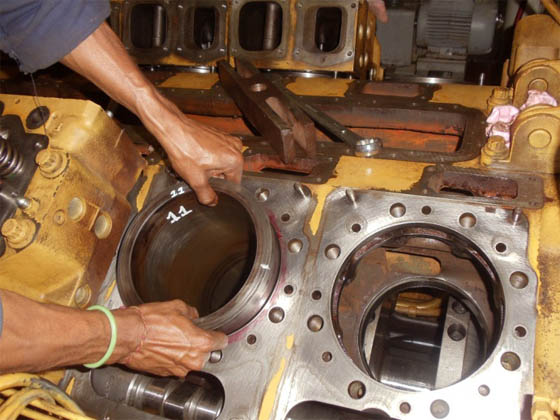

Compare the result with the required service life
The decision should consider the condition of the complete generator, supportability, installation suitability and the customer’s future requirement. Overhauling the engine does not automatically renew the alternator, controls or external systems. Agree the post-work test scope and the documentation to be supplied. Warranty, performance and service commitments must be confirmed for the particular overhaul arrangement.
Request Generator Service
Request Generator Service. Share the application, location and information available so the next discussion can address your actual requirement.
Related guidance
Engineering intent
Major Overhaul should be evaluated as part of the complete power system rather than as an isolated catalogue item. Operating duty, connected load, interfaces, protection, controls, installation conditions, testing requirements and lifecycle consequences determine whether the arrangement is appropriate.
Engineering considerations
The objective is not to eliminate every uncertainty. It is to identify, measure and reduce uncertainty before the commercial decision is made. For pre-purchase used-generator inspection, technical condition assessment, load testing, refurbishment evaluation or application suitability review, provide the generator make/model, rating, location, photographs and available history for scope verification.
Selection and design considerations
Integration and protection considerations
If inspection identifies crankshaft damage, the decision can become: Do not assume connecting rods are reusable simply because they are not normally included in an overhaul kit. A major overhaul is an appropriate point to assess the lubrication system. But oil-pump replacement should not automatically be added merely to make the kit appear “complete.” A mechanical engine overhaul does not automatically restore fuel-injection condition. The overhaul scope should explicitly state whether fuel-system work is included or excluded. An engine rebuild with a defective turbocharger can remain unreliable. But turbo replacement should still follow condition evidence—not automatic kit inflation. A PREMIUM PARTS KIT CANNOT COMPENSATE FOR POOR MEASUREMENT, MACHINING, CLEANLINESS OR ASSEMBLY.
Testing, commissioning and verification
Do not keep operating a generator with serious mechanical noise until the risk is understood. Blow-by or compression weakness may suggest deeper wear. These symptoms often move the discussion from ordinary repair toward overhaul assessment. Actual feasibility depends on engine model and fault evidence. May be possible where the engine can be rebuilt without complete removal, depending on design and site access. A deeper overhaul where the engine is removed or stripped extensively for major component work. Where overhaul is not sensible, repowering or generator replacement may be more practical. The correct option depends on technical evidence, cost, downtime, parts and future duty. Replacing parts without measurement and verification is not premium overhaul.
Operating and lifecycle considerations
A defined inspection has been completed and observations recorded. Defined restoration work has been performed according to an identified scope. What Was Found → What Was Repaired → What Was Replaced → What Was Tested → What Limitations Remain Major component work has been completed to a documented scope. For example, an engine overhaul may involve substantial engine work while other generator subsystems remain in their existing condition. The generator has been operated under an identified electrical load or controlled load-bank test. It does not automatically prove every internal component will remain fault-free in the future. A premium used-equipment programme should follow this rule: That creates much greater trust than describing every used generator as “excellent condition.”
Direct answer
A major overhaul is a significant intervention and should follow an assessment of condition, failure history and the required future duty. Record the symptoms, measurements and repair history that support the recommendation.
The practical decision for Major Overhaul should be based on verified load, equipment, interface and site information. Where equipment-specific data, regulatory applicability or a project study is required, this guidance does not replace that verification.