
Pistons, rings and liners work together within the engine’s defined construction and operating clearances. A component match must therefore consider the engine build and the applicable repair specification. A nominal bore or a familiar appearance is not sufficient to establish that separately sourced components are suitable to operate together.
Use measurements to define the repair
Wear, scoring, leakage or damage needs to be assessed using the relevant inspection procedure. Record the condition and measurements that determine whether components can be retained or require replacement. Previous repairs may be important. The parts enquiry should communicate the confirmed requirement rather than asking a supplier to infer a repair size from an incomplete description.
Verify before supply
- engine model
- engine serial
- arrangement/build
- bore/configuration
- existing part number
- overhaul findings
Kit content
A “piston kit” or “liner kit” may not mean the same thing across manufacturers or suppliers.
Related photographs and videos
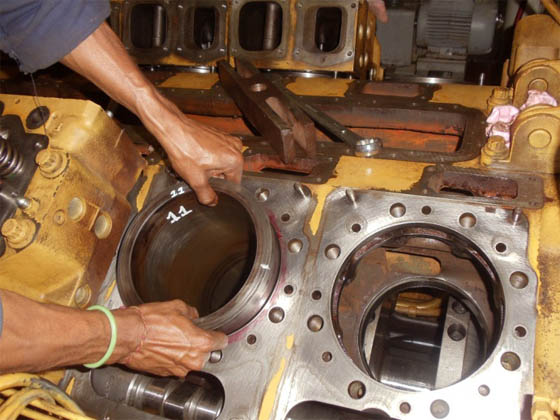
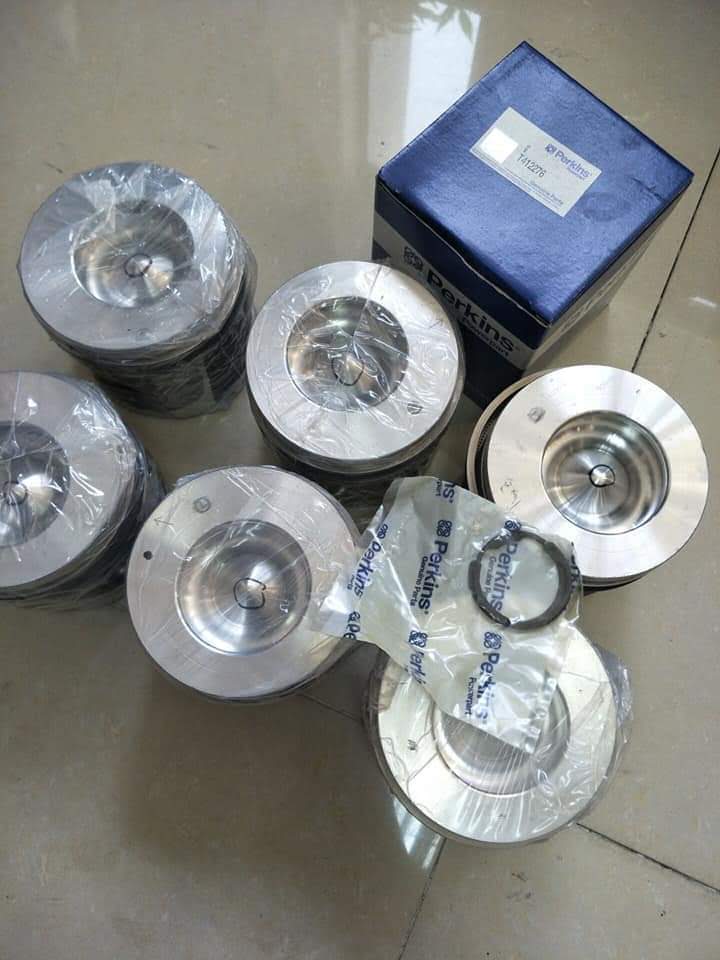
Root-cause connection
Engine service or major-overhaul assessment can help establish the cause of wear before replacement parts are selected.
Condition / provenance
- new
- compatible
- used
- refurbished
Investigate the cause of deterioration
The visible condition of a piston, ring or liner may be connected to lubrication, cooling, fuel delivery, air filtration or operating conditions. Replacing the damaged items without understanding the cause can leave the repair exposed to recurrence. Coordinate the parts selection with engine-service or overhaul assessment, retaining the identification, inspection findings and final component references in the repair record.
Find My Generator Part
Spare Parts Enquiry. Share the application, location and information available so the next discussion can address your actual requirement.
Related guidance
Engineering intent
Pistons, Rings & Liners should be evaluated as part of the complete power system rather than as an isolated catalogue item. Operating duty, connected load, interfaces, protection, controls, installation conditions, testing requirements and lifecycle consequences determine whether the arrangement is appropriate.
Engineering considerations
For every serious engine-parts enquiry, request where available: The generator kVA should be supporting information—not the sole identifier. Generator Engine Parts should function as the parent collection for specialist engine-part families including: Pistons & Rings Cylinder Liners Main Bearings Connecting-Rod Bearings Connecting Rods Crankshaft Components Cylinder Heads Valves & Valve-Train Parts Camshaft Components Gaskets & Seals Oil Pumps Water Pumps Fuel Pumps Injectors Turbocharger Components Filters Belts Hoses Thermostats Sensors & Switches Engine Mounts Overhaul Kits For piston-ring enquiries, obtain the engine identity first and existing piston/ring references where available. This leads directly to Pistons, Rings & Liners, which the master defines as the next specialist page. A liner should not be ordered solely because its nominal bore appears correct.
Selection and design considerations
PISTONS, RINGS & LINERS ARE A MATCHED COMBUSTION SYSTEM—NOT THREE GENERIC PARTS. Inside a diesel generator engine, the piston assembly operates under extreme: combustion pressure → temperature → acceleration → friction → lubrication demand → thermal expansion The piston, rings and cylinder liner must work together to: A component that merely fits dimensionally is not automatically the correct engine component. Engine manufacturer → Engine model → Engine serial number → Build / arrangement / specification number → Generator application → Existing component reference → Previous overhaul history Do not identify these components from generator kVA alone. A generator’s kVA rating describes electrical output capability. “Piston kit for 500 kVA DG” is an enquiry starting point—not a final specification. Differences in crown geometry can materially affect combustion behaviour.
Integration and protection considerations
Pistons Rings Liners Main Bearings Connecting-Rod Bearings Thrust Components Gaskets Seals Valves Other Previously Overhauled? Crankshaft Previously Ground? Head Previously Machined? Known Repair Sizes? Engine Nameplate Existing Part Numbers Workshop Measurements Failed Parts Previous Overhaul Report Photographs diesel generator overhaul kit • engine rebuild kit • piston liner kit • engine bearing set • gasket set • generator overhaul parts • diesel engine rebuild parts → requires engine identification → requires condition assessment → requires measurements → determines repair scope → generates BOM → BOM contains verified components → components require compatibility/provenance → overhaul requires controlled assembly → generator requires post-overhaul testing.
Testing, commissioning and verification
A data-centre standby generator and a continuously operating industrial generator may need different spare-parts inventories. Identify the required component group: maintenance consumables, pistons, rings, liners, bearings, gaskets, seals, fuel-system parts, cooling parts, turbochargers, lubrication parts, sensors, starting equipment or overhaul components. For piston, ring and liner enquiries, provide the engine model, serial or build details, existing part markings, repair history and relevant measurements. Confirm compatibility, supply source and condition before quotation. Distinguish genuine, compatible, used and refurbished parts using supporting evidence.
Operating and lifecycle considerations
This supports future failure investigation and lifecycle history. Piston Piston Ring Set Cylinder Liner Cylinder Kit Piston Pin Liner Seals Complete Engine Set Unknown / Help Identify Engine Make → Engine Model → Serial → Build → Existing Part No. → Quantity → Previous Overhaul? → Upload Photos → Requirement Final compatibility, source, condition, price and availability remain subject to verification and written quotation.
Direct answer
Pistons, rings and liners work together within the engine’s defined construction and operating clearances. A component match must therefore consider the engine build and the applicable repair specification.
The practical decision for Pistons, Rings & Liners should be based on verified load, equipment, interface and site information. Where equipment-specific data, regulatory applicability or a project study is required, this guidance does not replace that verification.