
→ transmits mechanical power → may drive cooling or charging equipment.
Identify each component by its function, equipment application and the consequence of failure.
Final compatibility, condition, source, availability and commercial terms remain subject to verification and written quotation.
Related photographs and videos
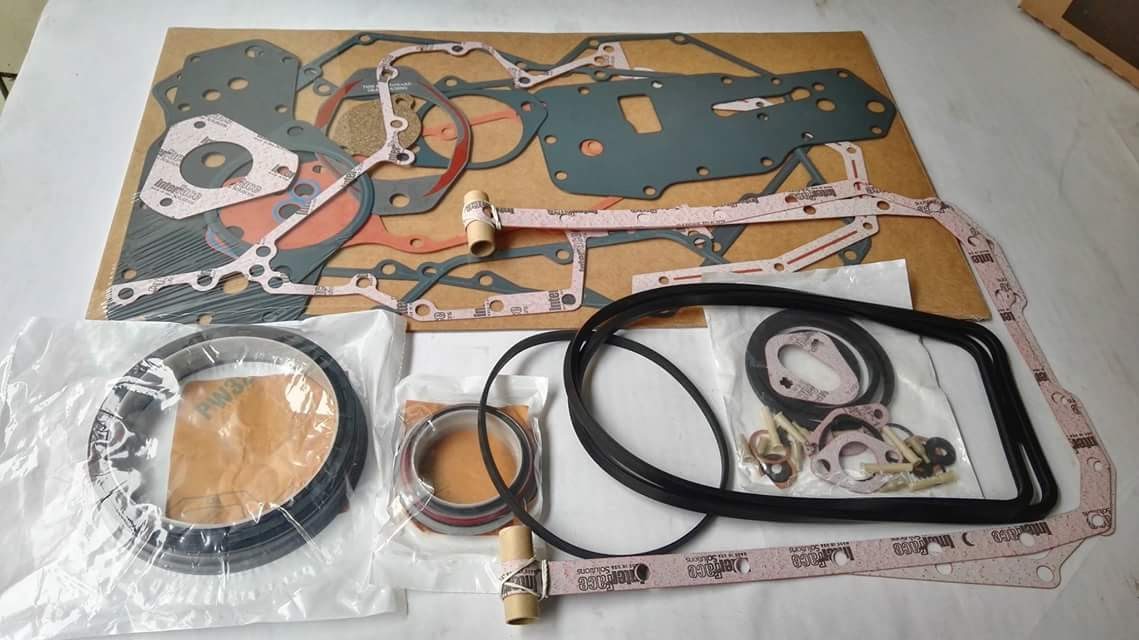
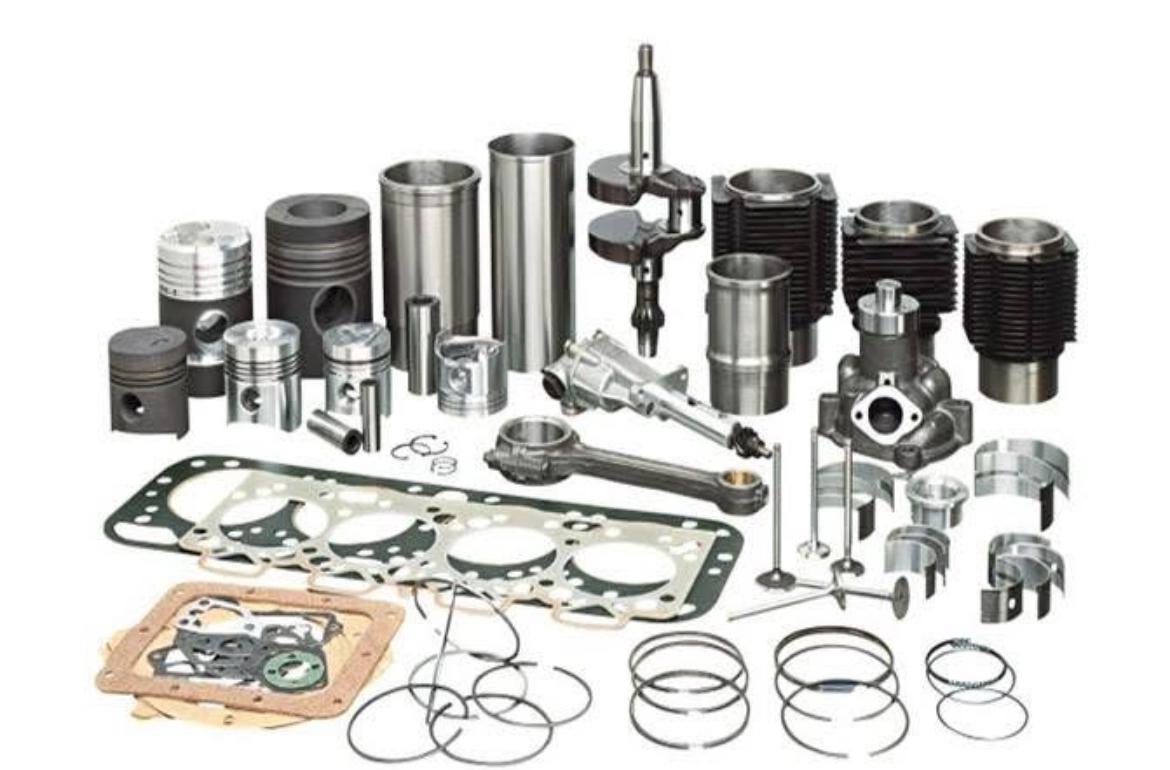
The verified master places Generator Overhaul Kits immediately after Hoses, Belts & Seals and before Generator Consumables, Used & Refurbished Parts Policy, Parts Compatibility Verification, and Industry Power Solutions.
A diesel-engine overhaul is not achieved by purchasing the largest box of parts available.
One supplier’s “complete overhaul kit” may contain a substantially different component scope from another supplier’s kit.
More importantly, the parts required should be determined by:
THE ENGINE MUST NOT BE FORCED TO FOLLOW THE KIT.
The word overhaul can describe very different levels of intervention.
A broader engine repair while major engine architecture remains installed, where technically applicable.
A comprehensive workshop-level restoration according to an agreed technical scope.
These descriptions must be defined for the specific engine and quotation.
An overhaul package might contain some combination of:
“Complete overhaul kit includes all of the above”
unless the actual supplied kit has been verified.
This creates a transparent Bill of Materials (BOM).
MODEL IDENTIFIES THE FAMILY. SERIAL/BUILD HELPS IDENTIFY THE ACTUAL MACHINE.
The original engine serial number does not automatically describe every dimension after years of repairs.
It becomes even more important for overhaul kits.
DO NOT ORDER MAJOR INTERNAL PARTS BEFORE DIMENSIONAL CONDITION IS KNOWN WHERE THE REPAIR REQUIRES IT.
The kit scope should emerge from the assessment.
Do not assume every cylinder requires identical intervention until condition is established.
Engine Bearings established that bearing selection can depend on:
Therefore a pre-packed standard bearing set may be wrong for a previously machined crankshaft.
A bottom-end overhaul kit does not automatically address top-end condition.
The quotation should specify exactly what is included.
Same dimensions do not establish correct seal compatibility.
Major engine overhaul should use correctly identified sealing components—not miscellaneous dimensionally similar O-rings.
14. Crankshaft Condition Can Change the Entire Kit
If inspection identifies crankshaft damage, the decision can become:
Do not assume connecting rods are reusable simply because they are not normally included in an overhaul kit.
A major overhaul is an appropriate point to assess the lubrication system.
But oil-pump replacement should not automatically be added merely to make the kit appear “complete.”
A mechanical engine overhaul does not automatically restore fuel-injection condition.
The overhaul scope should explicitly state whether fuel-system work is included or excluded.
An engine rebuild with a defective turbocharger can remain unreliable.
But turbo replacement should still follow condition evidence—not automatic kit inflation.
A PREMIUM PARTS KIT CANNOT COMPENSATE FOR POOR MEASUREMENT, MACHINING, CLEANLINESS OR ASSEMBLY.
Contamination introduced during overhaul can damage newly installed parts.
Therefore workshop cleanliness belongs inside overhaul quality assurance.
Otherwise the rebuilt engine can inherit the same failure mechanism.
The failed bearing may be the casualty—not the cause.
A new piston cannot correct a defective injector.
→ fan → water pump → thermostat → coolant → airflow → ventilation → load
Do not rebuild the engine and return it to the same unresolved thermal environment.
Every major overhaul component should have a controlled provenance status:
Only where technically appropriate, explicitly disclosed and separately approved.
Do not hide condition inside generic “overhaul kit” terminology.
→ manufacturer/brand → part reference → quantity → batch/serial where applicable → condition → engine asset → installation record.
If a future failure occurs, this traceability becomes valuable engineering evidence.
Do not discover halfway through assembly that the bearing set or liner kit is incorrect.
A historical part reference may have been superseded.
Not every damaged cylinder automatically requires complete engine rebuilding.
Conversely, repairing one visibly damaged cylinder may be poor economics if the remaining engine is already substantially worn.
At some point, the correct lifecycle decision may shift from:
condition + capacity + reliability + supportability + downtime + cost + future requirement.
→ assembly QA → fluid preparation → manual/pre-start checks → controlled initial start → oil pressure → leakage inspection → temperature behaviour → engine stability → alternator output → progressive loading → load-bank testing where appropriate → post-test inspection.
Do not wait until completion to decide what constitutes a successful overhaul.
A rebuilt generator that starts and idles has demonstrated only part of its capability.
A completed overhaul should establish a new documented baseline.
Future maintenance can then compare against a known condition.
→ Engine ID → Overhaul Date → Reason → Pre-Overhaul Condition → Measurements → Machining → Installed Parts/BOM → Suppliers → Test Results → Load Test → Operating Hours at Handover → Follow-up Requirements.
This transforms overhaul from an undocumented workshop event into lifecycle intelligence.
Top-End In-Frame / Intermediate Major Overhaul Complete Rebuild Failure Repair Unknown
Pistons Rings Liners Main Bearings Connecting-Rod Bearings Thrust Components Gaskets Seals Valves Other
Previously Overhauled? Crankshaft Previously Ground? Head Previously Machined? Known Repair Sizes?
Engine Nameplate Existing Part Numbers Workshop Measurements Failed Parts Previous Overhaul Report Photographs
Direct answer
An overhaul kit should correspond to a specific engine build and an agreed repair scope. Different inspections can lead to different replacement requirements.
The practical decision for Generator Overhaul Kits should be based on verified load, equipment, interface and site information. Where equipment-specific data, regulatory applicability or a project study is required, this guidance does not replace that verification.