
AMF operation involves detecting the relevant supply condition and coordinating the generator and transfer arrangement. The sequence should define starting, connection, restoration and stopping behaviour for the actual installation. Equipment-specific requirements and the facility’s continuity objective determine the accepted configuration.
Distinguish signals from confirmed states
A command to start or transfer is different from evidence that the action has completed. The control review should identify the feedback used and the response to an incomplete sequence. This requires the applicable sensing and switchgear interfaces to be understood.
Why delays exist
- very short disturbances
- unstable returning sources
- equipment transition requirements
Failure states
- generator fails to start
- generator output is unacceptable
- ATS does not transfer
- normal source returns during start
- control power fails
Test the agreed operating conditions
Commissioning should verify the authorised sequence and relevant abnormal conditions within a defined procedure. Record settings, observations and any limitations. The presence of an AMF function in a controller is not proof that the installed transfer system has been commissioned.
Related photographs and videos
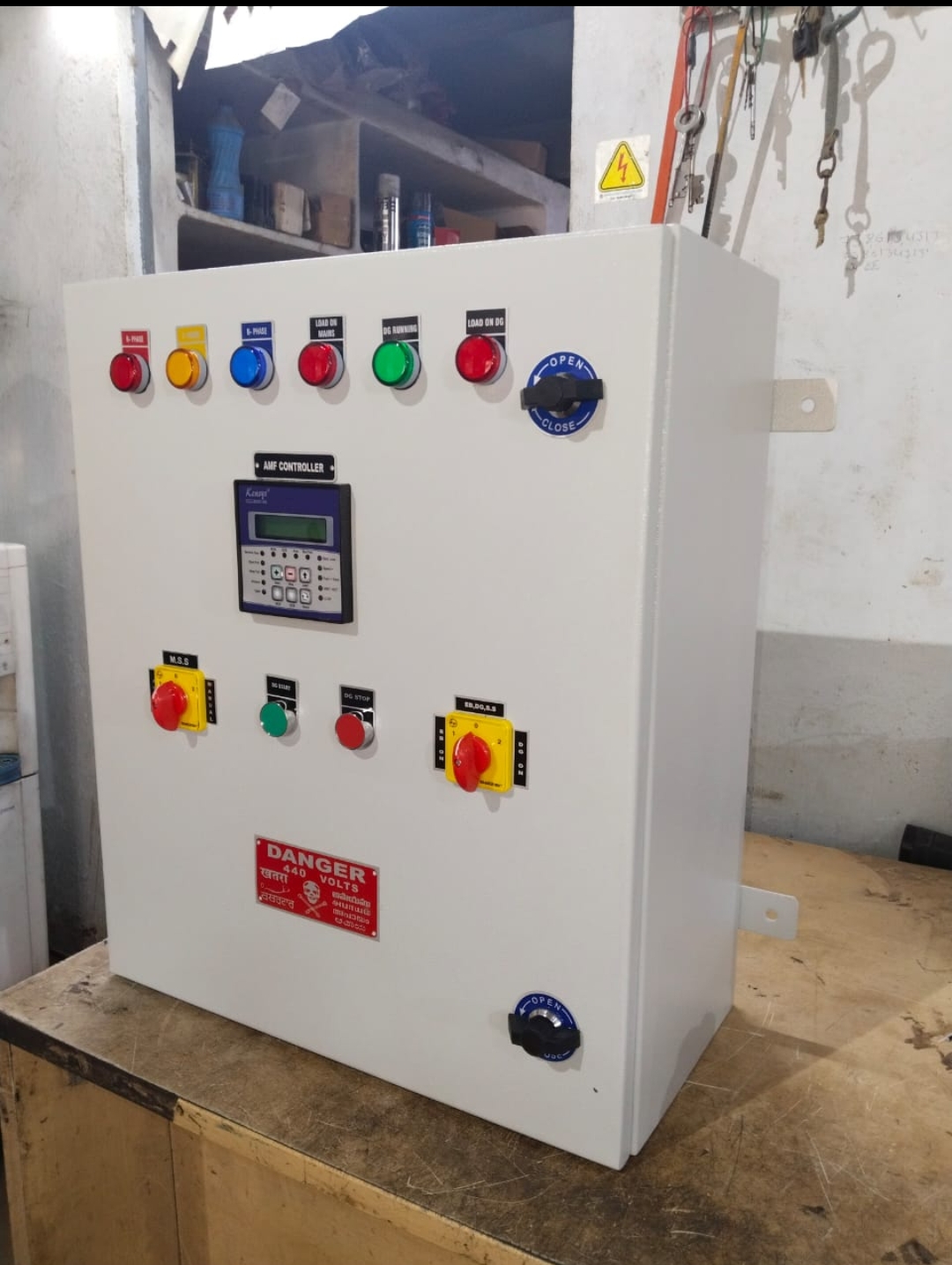
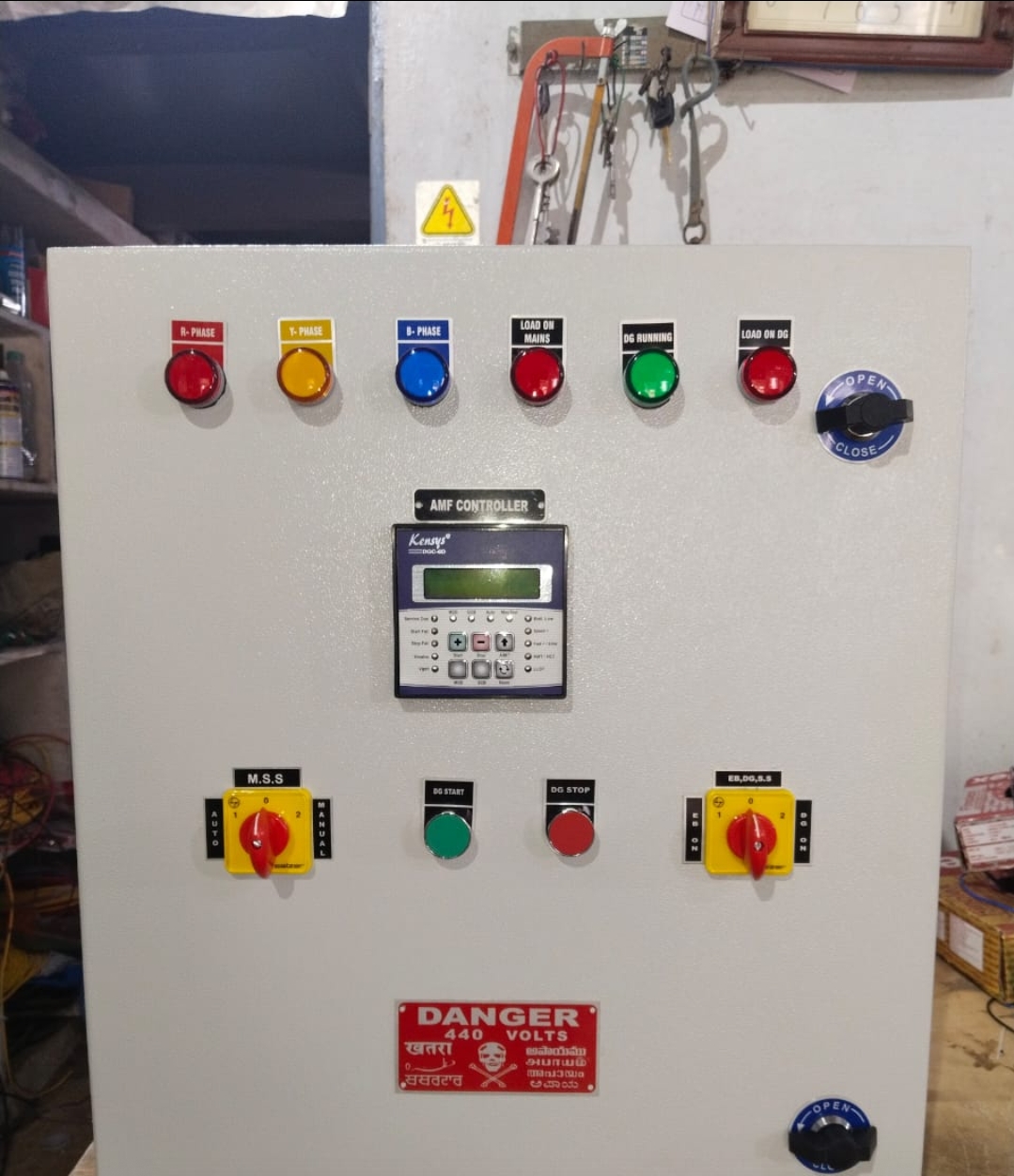
Review Technical Guidance • Request Engineering Review
Review Technical Guidance • Request Engineering Review. Share the application, location and information available so the next discussion can address your actual requirement.
Related guidance
Engineering intent
AMF Control Logic should be evaluated as part of the complete power system rather than as an isolated catalogue item. Operating duty, connected load, interfaces, protection, controls, installation conditions, testing requirements and lifecycle consequences determine whether the arrangement is appropriate.
Control-system requirement
The control architecture must connect sensing, source readiness, permissives, breaker or transfer commands, feedback, alarms, communications and fallback modes. An individual component test does not prove the complete operating sequence.
Engineering considerations
It does not prove the complete emergency-power chain. This prevents Utility–DG Transfer Control Architecture from duplicating the testing cluster. Important transfer states should be translated into actionable alarms/events. utility unavailable • DG start failed • alternate source unavailable • transfer failed • automatic transfer inhibited. For an outage, the system should be able to reconstruct
Selection and design considerations
with the required engineering margin and actual system behaviour. This is a conceptual continuity relationship, not a universal sizing formula. The generator controller remains responsible for its internal start sequence. Automatic Mains Failure logic can provide the source-failure/start-request function depending on the system architecture. ATS / AMF Control Logic Engineering will deepen ATS/AMF control logic specifically. The transfer controller should wait for appropriate generator feedback. voltage is not established • frequency is unacceptable • breaker/control system is unavailable. Before transfer, verify the DG meets the applicable electrical acceptance criteria. If DG does not become acceptable within the approved sequence: can leave only stored-energy continuity until another recovery path exists. Therefore UPS Battery Autonomy & Runtime Engineering/Critical-Power FMEA & Failure Scenario Engineering failure scenarios remain relevant to transfer design.
Integration and protection considerations
A site survey should expose uncertainty, not hide it. Identify where the generator can connect into the electrical system. The nearest panel is not automatically the correct connection point. This converts “connect here” into an engineering decision. Switchgear suitability should not be assumed from its physical presence. Detailed acceptance requires equipment data and competent electrical review. A healthy generator does not automatically mean a healthy transfer system. AMF logic monitors source status and coordinates generator response. A site may have generator-start logic without a suitable transfer arrangement. The transition method affects protection, controls, neutral architecture and commissioning. The survey must identify enough information to support neutral/earthing review.
Testing, commissioning and verification
When adding ATS/AMF functionality, do not weaken essential generator protections. Scope should be confirmed before the service visit. The system should not exist only in the memory of the installer. A clear ATS/AMF system must be operationally understandable. ATS/AMF settings can change the behaviour of the facility during a real outage. A completed test is not automatically a passed test. Starting logic and switching function are treated as one undefined thing. The system transfers to generator but does not return correctly. A partial test is misunderstood as complete proof. Detection, start, permissive, transfer, retransfer and cooldown logic. Rating, poles, interlocks, fault withstand and operating method. Source sensing, failure confirmation and generator start logic.
Operating and lifecycle considerations
No universal voltage or frequency threshold should be published across every system. Do Not Start the Generator for Every Tiny Disturbance If the generator responded immediately to every momentary deviation, the installation could experience: Automation can therefore use a failure-confirmation delay or other defined logic before declaring the normal source unacceptable. Once the abnormal condition is confirmed, the automation system can issue a generator-start command. But the start command is only the beginning. Automatic-generator reliability therefore depends on mechanical and electrical readiness as well as software logic. Issuing the start command does not prove successful generation. The system may need to verify appropriate generator operating conditions before proceeding.
Direct answer
AMF operation involves detecting the relevant supply condition and coordinating the generator and transfer arrangement. The sequence should define starting, connection, restoration and stopping behaviour for the actual installation.
The practical decision for AMF Control Logic should be based on verified load, equipment, interface and site information. Where equipment-specific data, regulatory applicability or a project study is required, this guidance does not replace that verification.