
Switchgear Determines How Generated Power Is Controlled, Protected and Distributed.
Low-voltage generator systems may interface with:
- generator breakers
- ATS
- synchronising panels
- main switchboards
- essential distribution boards.
DESIGN VARIABLES
- nominal voltage
- current
- fault level
- bus rating
- breaker capacity
- protection
- segregation
- environmental rating.
HIGH CURRENT MATTERS
Large low-voltage generation can produce very high current.
Related photographs and videos
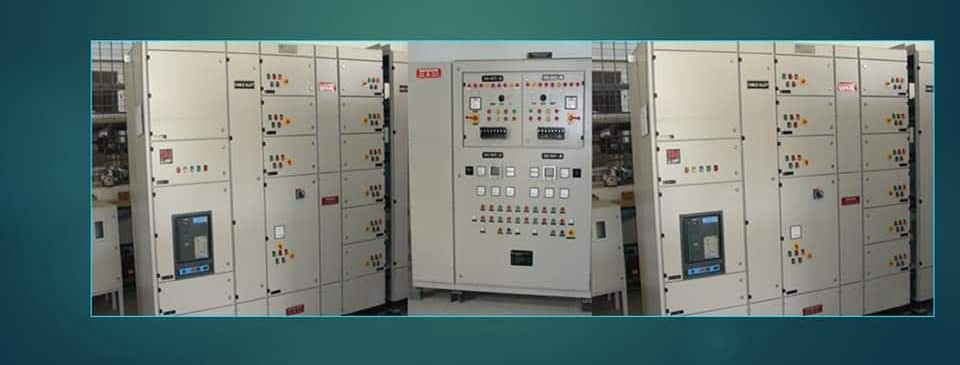
That affects:
- busbar size
- cable quantity
- breaker selection
- heat
- switchboard footprint.
MAINTAINABILITY
Switchgear should consider:
- inspection
- isolation
- testing
- breaker maintenance
- future expansion.
SAFEGUARD
Switchgear design and fault-duty selection require project-specific engineering.
Generation only becomes usable when switchgear controls where the power goes.
Engineering intent
LV Generator Switchgear should be evaluated as part of the complete power system rather than as an isolated catalogue item. Operating duty, connected load, interfaces, protection, controls, installation conditions, testing requirements and lifecycle consequences determine whether the arrangement is appropriate.
Engineering considerations
A transformer can be below nameplate rating yet constrained by: Can one transformer carry the required critical load if the other is unavailable? But it can also reduce equivalent source impedance and increase LV fault current. This is one of the most important Electrical Capacity Expansion & Future-Proofing Studies principles: MORE SOURCE CAPACITY CAN MAKE EXISTING SWITCHGEAR UNDERRATED FOR FAULT DUTY. Even replacing an existing transformer with one having the same rating but lower impedance can increase fault level. busbar rating • incomer rating • outgoing ways • thermal environment. A spare breaker compartment does not prove the bus has capacity for the proposed feeder. bus ampacity • fault rating • source capacity • protection capability. Forecast current should remain within the verified assembly capability under the actual installation conditions.
Selection and design considerations
sensors • actuators • shutdowns • breaker controls • CT/VT inputs • governor/AVR interfaces • wiring • logic • protection boundaries. If the existing DG is manually operated but the future mission requires automatic utility-failure response: If future operation requires multiple generators in parallel, assess whether the existing: A synchronising controller does not magically make an unsuitable generator/switchgear system safe for parallel operation. breaker condition • rating • operating mechanism • control power • auxiliary contacts • trip/close functionality • fault-duty suitability. A legacy breaker can remain mechanically functional while no longer being adequate for the modified system’s prospective fault duty. Existing protection settings should not be copied into a new architecture without verification. Existing DG capacity should be rechecked against the future load:
Integration and protection considerations
Running motors can contribute to initial short-circuit current. Therefore a large motor expansion can modestly or materially alter bus fault duty depending on the system. Do not buy the final ultimate fleet on day one automatically. Where appropriate, switchgear/PMS architecture can be designed to permit additional DG modules later. future cubicles • synchronising capacity • bus rating • controller expansion.
Testing, commissioning and verification
Do not specify the highest form merely for prestige. The benefit should match the maintenance and operational requirement. Draw-out ACBs or withdrawable MCC units can improve certain
Operating and lifecycle considerations
source strength • transformer impedance • generator impedance • cables • reactors • motors • network configuration. ACBs • MCCBs • MCBs • fuses • switchboards • busbars • cables • CTs • protection relays • transformers • ATS/changeover equipment • generator switchgear. Protection Coordination & Selectivity and Arc-Flash Risk & Mitigation Engineering will build on this page. Prospective short-circuit current is the current that would flow under the defined fault and network conditions before the interrupting action of the protective system is considered in the applicable manner.
Decision and application considerations
explicitly authorised • secured • logged • disabled/restricted when unnecessary Do not use permanent uncontrolled remote-desktop access to critical switch
Engineering considerations
After adequate generation returns, loads should be restored in a controlled sequence. Connecting every shed motor simultaneously can create a new: After complete loss of power, one designated generator may start and energise a dead bus. Then additional generators can be synchronised sequentially as required. If several generators are ready while the bus is dead, the control system must prevent
Direct answer
Switchgear Determines How Generated Power Is Controlled, Protected and Distributed. Low-voltage generator systems may interface with: generator breakers ATS synchronising panels main switchboards essential distribution boards.
The practical decision for LV Generator Switchgear should be based on verified load, equipment, interface and site information. Where equipment-specific data, regulatory applicability or a project study is required, this guidance does not replace that verification.
Related Reddy Generators pathways
- Integrated Power Systems
- Generator Sizing
- Power Requirement Configurator
- Industry Power Solutions
- Application Engineering Enquiry
Protection-chain verification
A circuit breaker is the final interrupting element in a wider protection chain. Reliable fault clearing depends on measurement inputs, relay logic, control power, trip circuits, breaker mechanism, interruption time and selectivity operating together. Maintenance therefore needs to verify the complete detect → decide → trip → interrupt → isolate sequence, not merely the mechanical condition of the breaker.