
Mobility Changes More Than the Chassis.
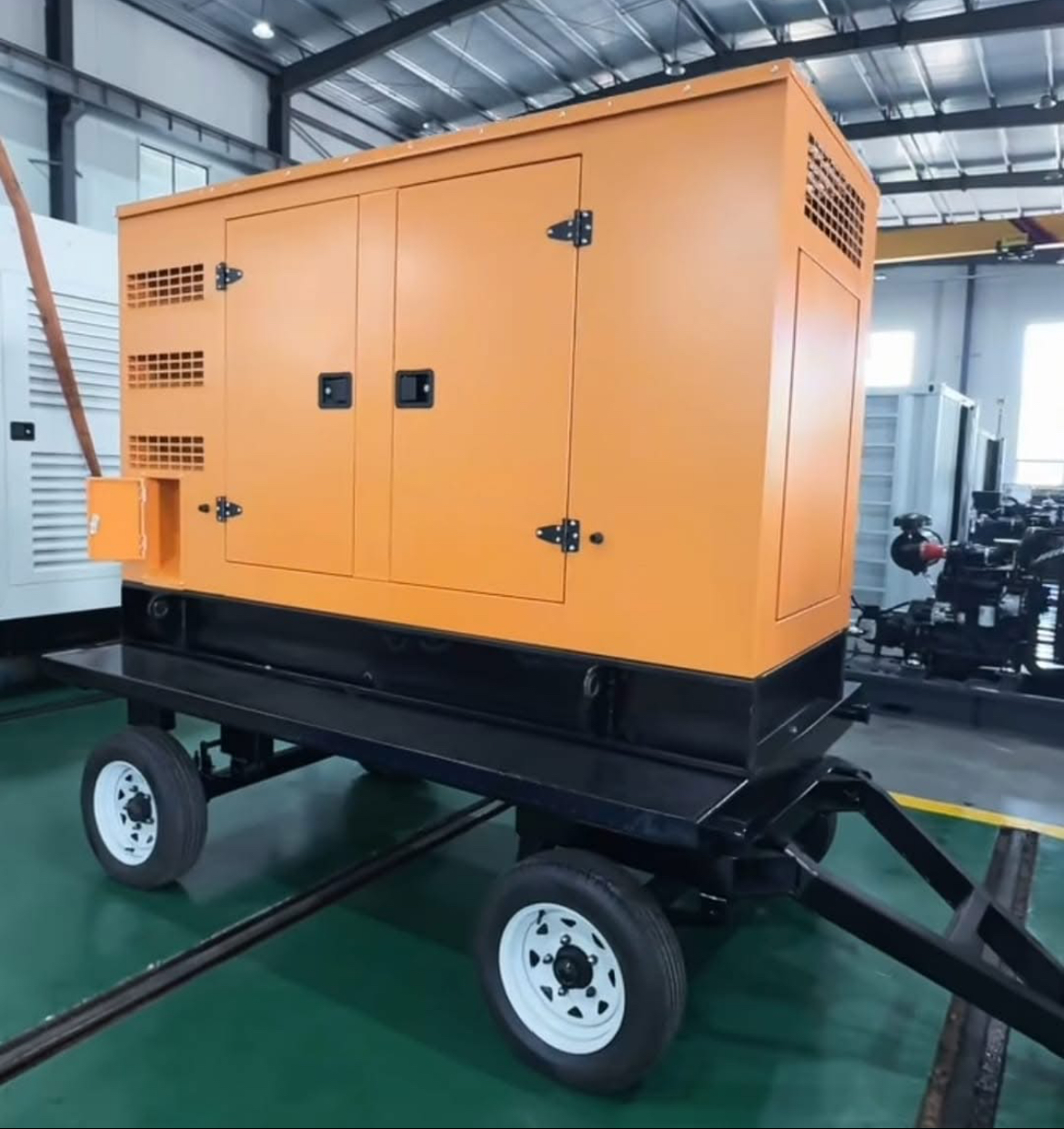
A relocatable generator can move between operating environments.
That means each deployment can change:
Related photographs and videos
- cable length
- earthing arrangement
- access
- fuel logistics
- ambient conditions
- protection
- connection point
- acoustic impact.
Mobility must therefore be treated as an engineering parameter.
POTENTIAL APPLICATIONS
Mobile and trailer configurations can support suitably verified:
- construction
- infrastructure
- project power
- temporary industrial requirements
- maintenance outages
- remote work
- commissioning.
SITE-TO-SITE VARIABLES
Before every deployment confirm:
Electrical
Voltage, phase, frequency and connection.
Load
Running and transient demand.
Position
Stable ground, access and exhaust clearance.
Distribution
Cable routes and panels.
Earthing
Appropriate project-specific arrangement.
Fuel
Operating duration and refuelling.
TRANSPORT ARCHITECTURE
Mobility introduces requirements beyond ordinary generator engineering:
- axle/trailer configuration
- weight
- lifting
- towing requirements
- road movement
- secure positioning.
Actual transport suitability must be verified against the equipment and jurisdiction.
CAPABILITY BOUNDARY
Discuss mobile and trailer systems as:
SOURCED ON REQUEST
unless specific equipment has been verified as owned or immediately available.
The enquiry follows these steps:
REQUIREMENT
- CONFIGURATION
- SUPPLIER / EQUIPMENT CONFIRMATION
- AVAILABILITY
- COMMERCIAL OFFER
Mobile power succeeds when the electrical system is designed to move with the generator.
Engineering intent
Mobile & Trailer Generators should be evaluated as part of the complete power system rather than as an isolated catalogue item. Operating duty, connected load, interfaces, protection, controls, installation conditions, testing requirements and lifecycle consequences determine whether the arrangement is appropriate.
Engineering considerations
The Generator Must Reach the Place Where Power Is Needed A generator that cannot be positioned correctly is not a usable power solution. Equipment movement should be based on the actual configuration. Registration, towing requirements, lighting, axle configuration, permits and other transport requirements depend on the actual equipment and applicable regulations. Transport suitability must therefore be verified for the specific unit and movement. Once onsite, placement should consider more than convenience. Trailer or mobile equipment should operate from a suitably stable position according to its design. Equipment configuration and placement should therefore match the intended environment. A generator suitable for one project should not automatically be assumed suitable for every environment.
Selection and design considerations
Mobility therefore changes both the electrical risk profile and the mechanical deployment risk profile. A mobile generator succeeds only when the complete temporary-power system can move safely and reliably with the generating source. A mobile generator is a generating system configured for relocation between operating locations. Generating equipment integrated with a trailer or towable chassis. Equipment that can be lifted or transported between sites but is not necessarily road-towable. Larger packaged systems configured for relocation using appropriate transport and lifting arrangements. The word mobile should not imply that every generator can simply be attached to a vehicle and moved. The generator itself may remain technically unchanged between projects.
Integration and protection considerations
How efficiently is fuel being converted into useful electrical energy? kW → kWh → Load Factor → L/h → L/kWh Mobile generation naturally fits many rental and temporary-power requirements. The categories can overlap, but the engineering objective is different. Not every rental generator requires a trailer architecture. A generator can be transported to a project and remain static for months. Do not add wheels simply because the generator is rented. Certain projects may require more than one mobile generator. Security should support safe operation without restricting cooling or emergency access. Repeated deployment increases dependence on correct operating procedure.
Testing, commissioning and verification
Replacing utility or transformer supply with generator supply can change: Therefore, protection behaviour should not automatically be assumed identical after a temporary generator is connected. Every New Site Creates a New Earthing Question A mobile generator can move between locations with completely different electrical and physical conditions. Do not use one remembered earth-resistance number as a universal design rule. Will the fault path allow protection to operate correctly while controlling dangerous touch potential? The required architecture depends on the complete installation. A mobile generator may feed more than one load.
Operating and lifecycle considerations
Higher-capacity generator systems can require a more substantial enclosure than a conventional compact acoustic canopy. A correctly designed structure can provide a controlled physical environment around important equipment. Similar modules can simplify interfaces across repeated project locations where engineering conditions are suitably controlled. A project-specific module may be designed with movement or relocation in mind. Transportability must nevertheless be verified against the actual structure, dimensions, mass, lifting arrangement and applicable transport requirements. Containerisation can create a defined boundary between generating equipment and the surrounding site. Acoustic treatment can be incorporated into the module where required.
Decision and application considerations
Generator → 200 m Cable → Temporary Switchboard → Multiple Feeders → Motors Voltage drop, fault current, protection, cable heating and earthing still have to work correctly at every deployment. kW and kVA should be derived from actual demand. Occasional relocation and daily redeployment create different mechanical and cable-management requirements. Do not select mobile power simply from total connected wattage. Motor loads, UPS systems, VFDs, welders and nonlinear electronics can behave differently from simple resistive loads. The steady-state operating current does not tell the entire story. During starting, the electrical demand may rise sharply.
Direct answer
Mobility Changes More Than the Chassis. A relocatable generator can move between operating environments.
The practical decision for Mobile & Trailer Generators should be based on verified load, equipment, interface and site information. Where equipment-specific data, regulatory applicability or a project study is required, this guidance does not replace that verification.