
An alternator service enquiry may concern abnormal voltage, heating, noise, vibration, insulation condition or visible damage. Record when the symptom occurs and whether it depends on load. Include the alternator model and serial number, excitation arrangement and relevant service history. These details guide the investigation and the applicable inspection requirements.
Check the complete generating interface
Alternator behaviour can be affected by engine speed, connections, sensing, excitation equipment and the connected load. The investigation should distinguish an internal machine problem from an external control or operating condition. A voltage complaint, for example, is not sufficient by itself to conclude that the windings require repair.
Testing
Use the limits and test procedures specified for the actual alternator and excitation system.
Related photographs and videos
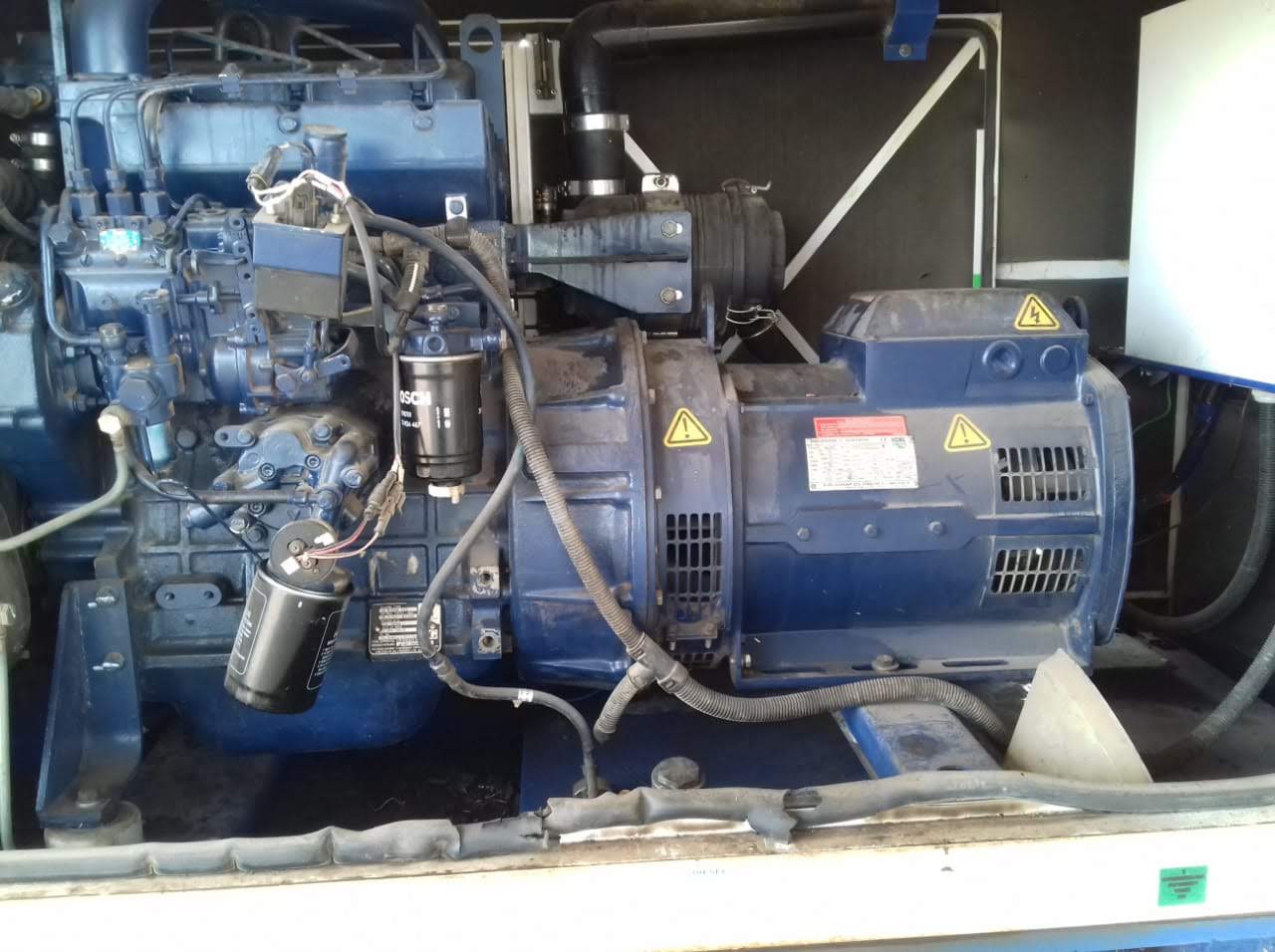
Alternator service should establish whether the problem lies in generation, excitation, connection or control.
Use model-specific tests and limits
Inspection and testing must suit the actual machine, its insulation system and connected electronic equipment. The work record should identify the procedure, conditions and results, together with any repairs or replaced components. Universal insulation or excitation values should not be substituted for applicable manufacturer requirements. Final verification needs to address the original symptom and the intended operating duty.
Request Generator Service
Request Generator Service. Share the application, location and information available so the next discussion can address your actual requirement.
Related guidance
Engineering intent
Alternator Service should be evaluated as part of the complete power system rather than as an isolated catalogue item. Operating duty, connected load, interfaces, protection, controls, installation conditions, testing requirements and lifecycle consequences determine whether the arrangement is appropriate.
Engineering considerations
Generator service is therefore not just repair. It is lifecycle reliability engineering.
| Engine service | starting, combustion, lubrication, cooling, fuel delivery |
|---|---|
| Alternator service | voltage stability, insulation condition, winding health |
| Control-panel service | start/stop logic, alarms, shutdowns, monitoring |
| Battery & charger service | start readiness and control power |
| Cooling service | heat rejection and safe operating temperature |
Selection and design considerations
Prime-power alternator maintenance must be planned around operating duty, not only calendar time. The alternator may be the component showing the stress, not the original cause. A data-centre alternator service should define the evidence boundary: machine condition, power quality, load test, UPS compatibility, or full critical-power sequence. Final compliance depends on project-specific design, testing, documentation and applicable authority requirements. A new controller display does not prove alternator health. 05 — Inspect terminals, cables and neutral/earth connection 08 — Check excitation/diode/exciter path where required 15 — Recommend repair / clean / dry / rewind / replace / deeper test 6. complaint — no voltage, low voltage, high voltage, unstable voltage, trip, overheating;
Integration and protection considerations
A mechanically repaired generator still needs electrical output verification. Evidence points strongly to AVR but further testing may be required. AVR may be healthy; exciter/diode/field path needs correction. AVR is responding to incorrect or missing measurement. Voltage fault appears because of overload, motor starting, UPS/VFD behaviour or poor PF. Winding, insulation, terminal, bearing or cooling condition requires alternator service. 09 — Check alternator terminals and neutral/earth connection 10 — Review load type, PF, UPS, VFD, motors and harmonics 14 — Review over/under voltage or loss-of-excitation events 15 — Decide whether fault is AVR, sensing, excitation, alternator, load or protection 8. complaint — no voltage, low voltage, high voltage, unstable voltage, voltage drop on load;
Testing, commissioning and verification
Focuses on the alternator as an electrical machine: Stator • Rotor • Exciter • Diodes • Bearings • Insulation • Terminals • Neutral • Cooling • Electrical Output AVR • Sensing • Field Output • Voltage Stability • Adjustment • Control Interface The two pages must link closely, but they are not the same. A voltage fault may come from the AVR. It may also come from the alternator, sensing circuit, load, cable voltage drop, protection trip, engine speed or controller configuration. A professional alternator service should move from symptom to measurement, not from symptom to guesswork. Do not automatically replace the AVR without checking the alternator and sensing chain. A generator can show voltage at the terminals but still fail the load if voltage collapses during actual duty.
Operating and lifecycle considerations
Direct answer
An alternator service enquiry may concern abnormal voltage, heating, noise, vibration, insulation condition or visible damage. Record when the symptom occurs and whether it depends on load.
The practical decision for Alternator Service should be based on verified load, equipment, interface and site information. Where equipment-specific data, regulatory applicability or a project study is required, this guidance does not replace that verification.