
A generator may accumulate few operating hours while still being exposed to ageing, contamination or deterioration during standby. Another unit may run frequently under demanding site conditions. The maintenance plan needs to reflect the actual duty and manufacturer requirements, with appropriate attention to observed condition. One fixed schedule cannot be assumed suitable for every generator and installation.
Check the systems needed for the next start
The inspection scope can include starting and charging, fuel, lubrication, cooling, air and exhaust paths, electrical output, controls and the surrounding installation. Routine work should also identify developing issues that need a separate investigation. Replacing service items does not demonstrate that every operating function or external interface has been verified.
Systems to review
- engine
- lubrication
- cooling
- fuel
- battery
- starting
- alternator
- controls
- installation
Maintenance frequency
- manufacturer guidance
- operating hours
- calendar period
- duty
- environment
- condition
No-load running
A generator that runs successfully without load has not necessarily demonstrated full-load capability.
Related photographs and videos
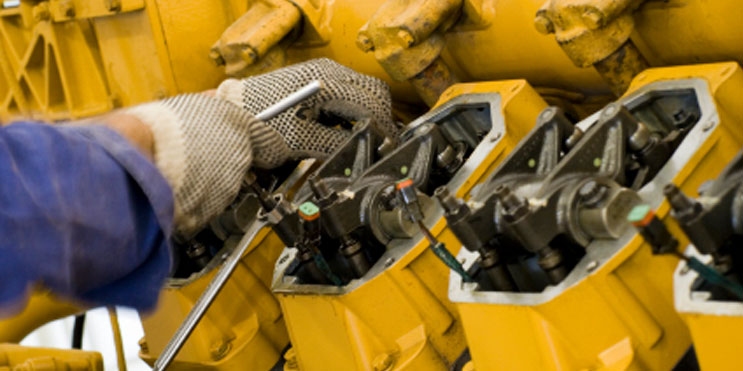
Preventive maintenance is the discipline of finding deterioration before the outage finds it.
Use the applicable maintenance basis
Maintenance plans should identify the asset, operating duty, manufacturer requirements and records of previous work. A checklist from another company is useful as a prompt, but its intervals and contractual promises do not define the maintenance plan for your generator.
Track findings over time
Record running hours, the work performed, relevant measurements, parts and consumables used, and outstanding recommendations. Compare recurring observations with earlier records rather than treating every visit as unrelated. Any change to maintenance intervals or scope should have a documented basis and the appropriate approval. Planned maintenance is most useful when it leaves a clear picture of condition and the next required action.
Request Generator Service
Request Generator Service. Share the application, location and information available so the next discussion can address your actual requirement.
Related guidance
Engineering intent
Preventive Maintenance should be evaluated as part of the complete power system rather than as an isolated catalogue item. Operating duty, connected load, interfaces, protection, controls, installation conditions, testing requirements and lifecycle consequences determine whether the arrangement is appropriate.
Temporary does not mean improvised
Temporary power still requires load assessment, source sizing, cables and distribution, protection, earthing, fuel planning, access, commissioning and operating responsibility. The machine may be temporary; the engineering controls cannot be.
Engineering considerations
Older Reddy maintenance material correctly identifies routine checks such as control-panel readings, indicators, fuel filters, air filters, regular component replacement, logging inspection dates and recording hour-meter readings. It also notes that unusual variation in readings can indicate faulty performance. Preventive maintenance converts generator condition into documented reliability evidence. Preventive Maintenance Is Not Only Oil and Filters Oil, fuel filters and air filters matter — but they are only one part of generator readiness.
| Engine | starting, combustion, lubrication, cooling and mechanical health |
|---|---|
| Lubrication | oil level, oil condition, oil filter, leaks and service interval |
| Fuel system | fuel delivery, filtration, water contamination, tank condition |
| Cooling system | coolant, radiator, fan, belts, hoses, ventilation interaction |
Selection and design considerations
The Best Time to Find a Generator Problem Is Before the Power Fails. A generator is not truly reliable because it started last month. It is reliable when the engine, alternator, controller, battery, fuel system, cooling system, exhaust path, cables, protection, transfer logic and maintenance record all confirm that the generator is ready for its actual duty. Preventive maintenance is the disciplined process of inspecting, servicing, testing, recording and correcting generator-system deterioration before it becomes a breakdown. A diesel generator should not be maintained because it failed. It should be maintained so it does not fail when the load depends on it.
Integration and protection considerations
Replacing only one battery in a multi-battery system may create mismatched condition, depending on system design and battery state. Replacement strategy should follow manufacturer guidance and the condition of the complete battery set. A charger alarm can be early evidence of a future starting failure. Ignoring a charger alarm because the generator is currently not needed can undermine standby readiness. The correct time to discover a starting-system problem is before the next power outage. Preventive maintenance should not treat the battery as a visual checkbox.
Testing, commissioning and verification
| What does the machine condition show right now? They are not enemies. They should work together. | Preventive maintenance |
|---|---|
| Scheduled inspections, oil/filter service, battery checks, routine servicing | Predictive maintenance |
| High-value assets, critical loads, abnormal trends, condition-based decisions | PM should create the baseline. PdM should identify the deviation. RCA should remove the cause. A premium preventive-maintenance visit should produce a record, not only a verbal update. This creates an auditable maintenance history and protects both customer and service provider. Critical facilities should not treat PM as a casual checklist. It should state that Reddy Generators can support generator maintenance readiness, while final compliance remains project-specific. |
Direct answer
A generator may accumulate few operating hours while still being exposed to ageing, contamination or deterioration during standby. Another unit may run frequently under demanding site conditions.
The practical decision for Preventive Maintenance should be based on verified load, equipment, interface and site information. Where equipment-specific data, regulatory applicability or a project study is required, this guidance does not replace that verification.